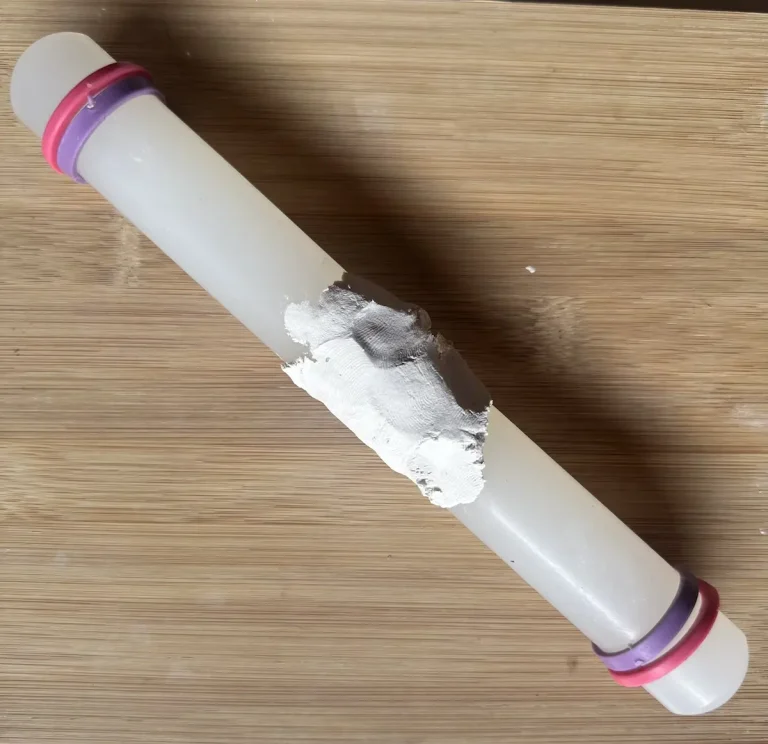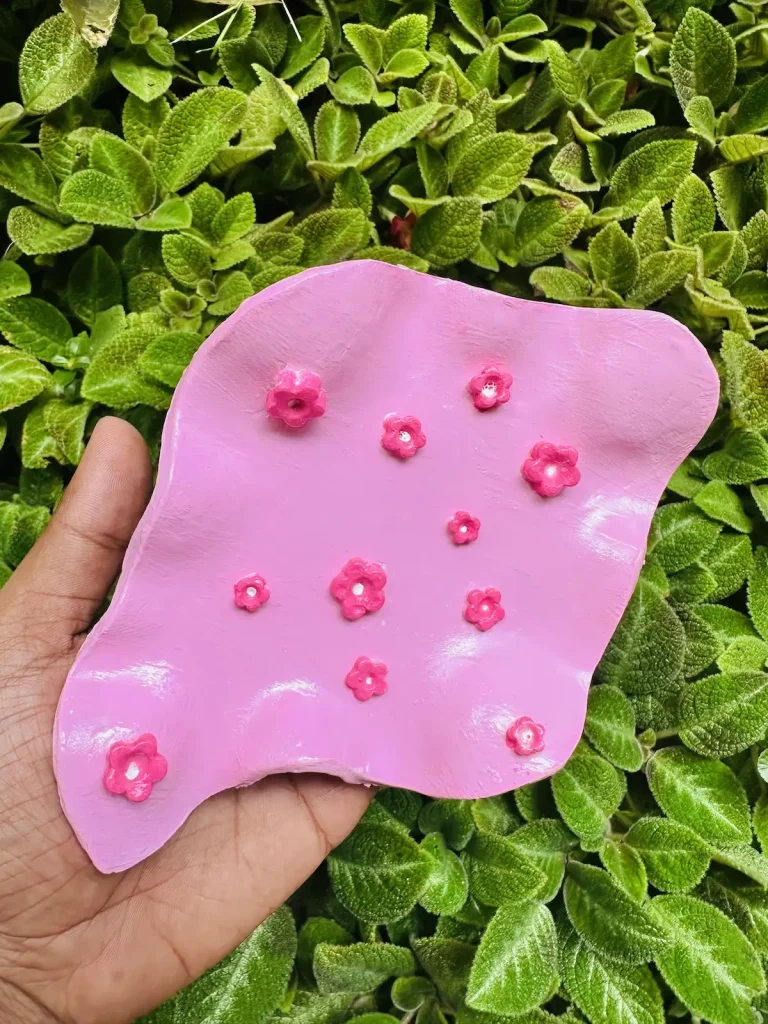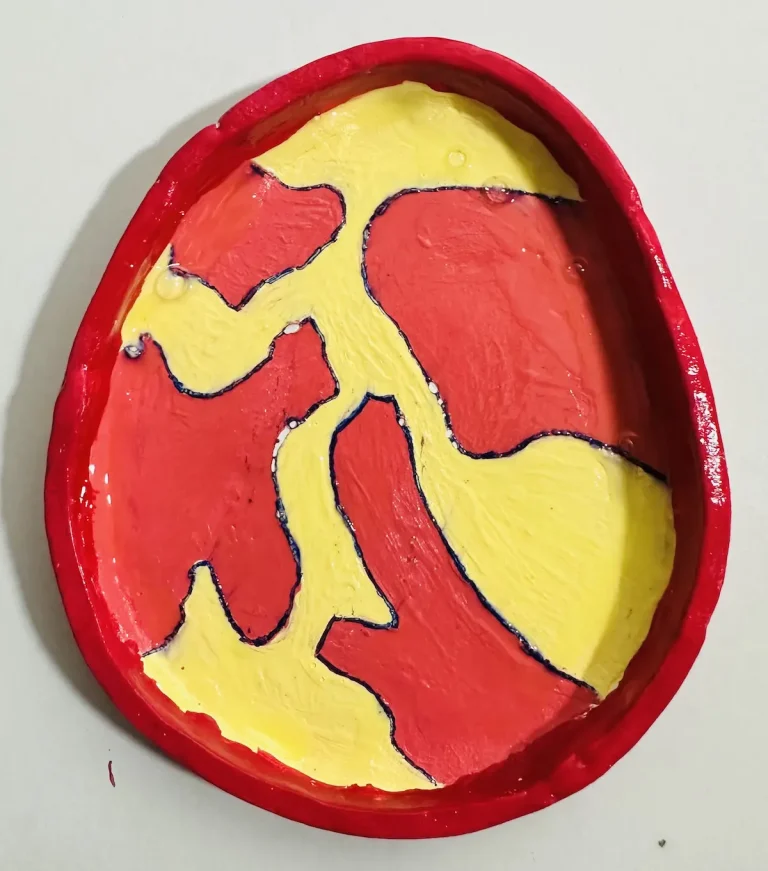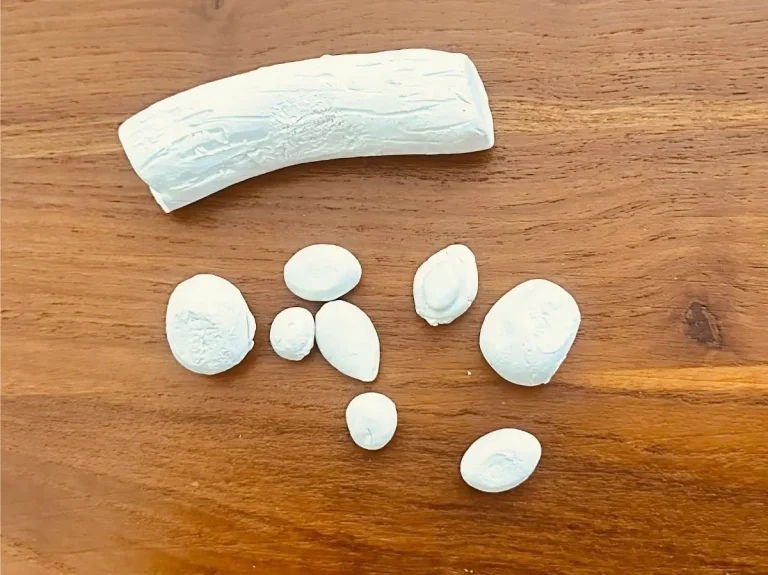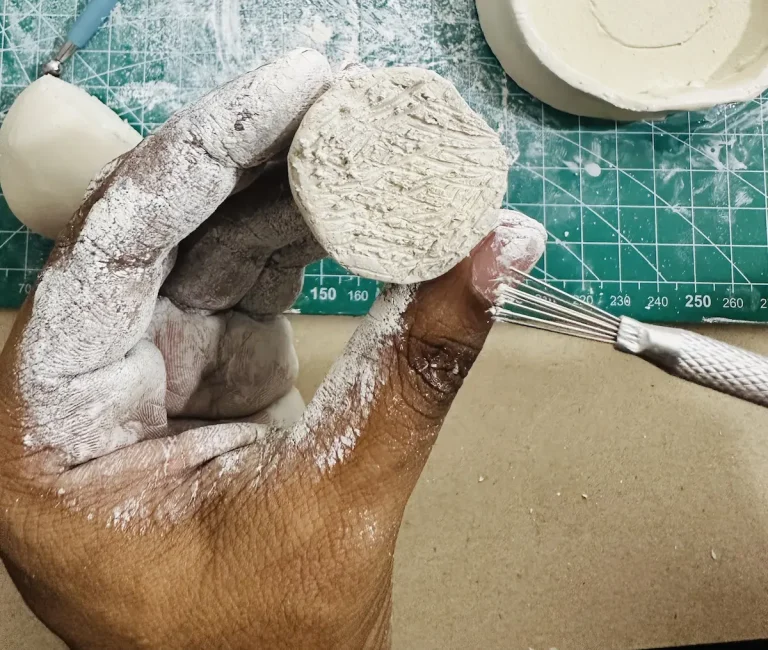

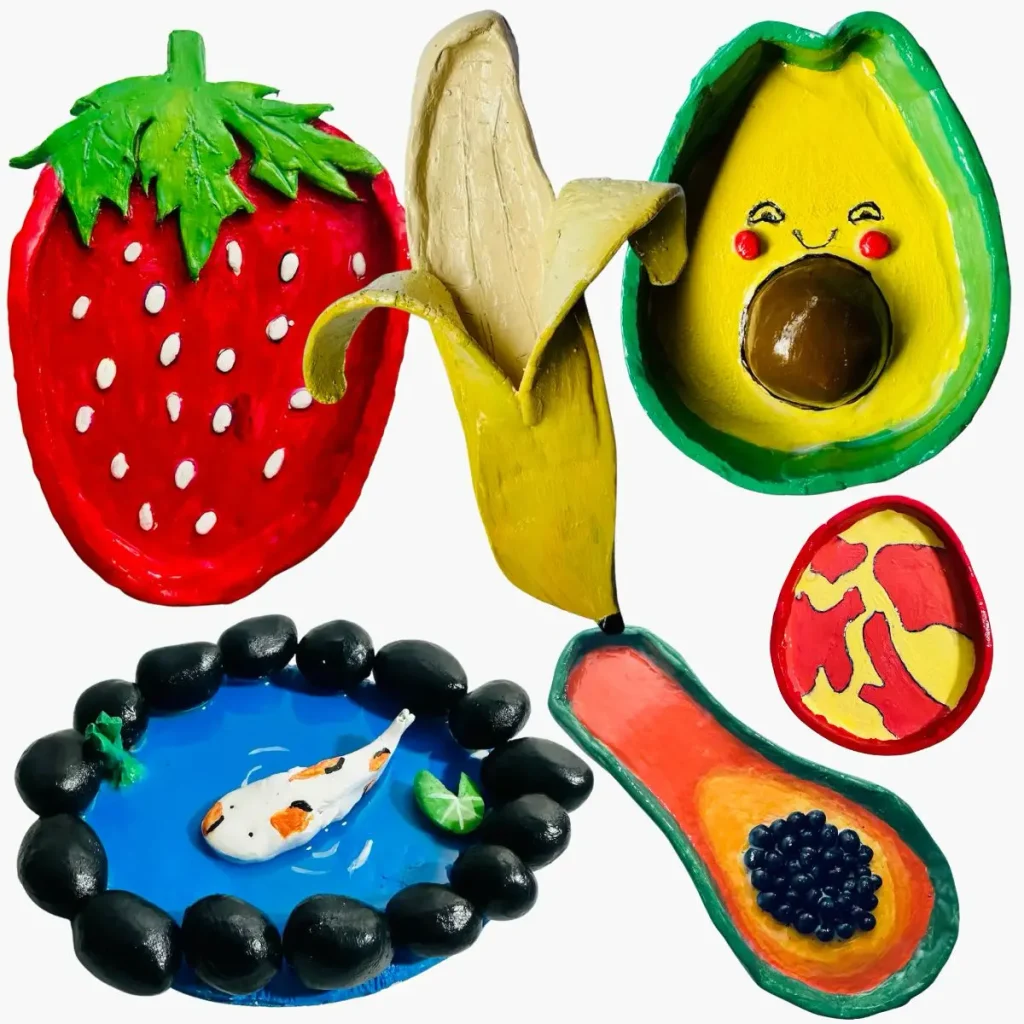
I have made home decor items with air dry clay, including many trinket trays, a koi fish pond, and more. ✨ But what about outdoor decor items? Have I tried to make one? Yes, I planned to make one, but I didn’t start making it because, after the research I did, I came to realize that air dry clay is strictly for indoors only. 🏠
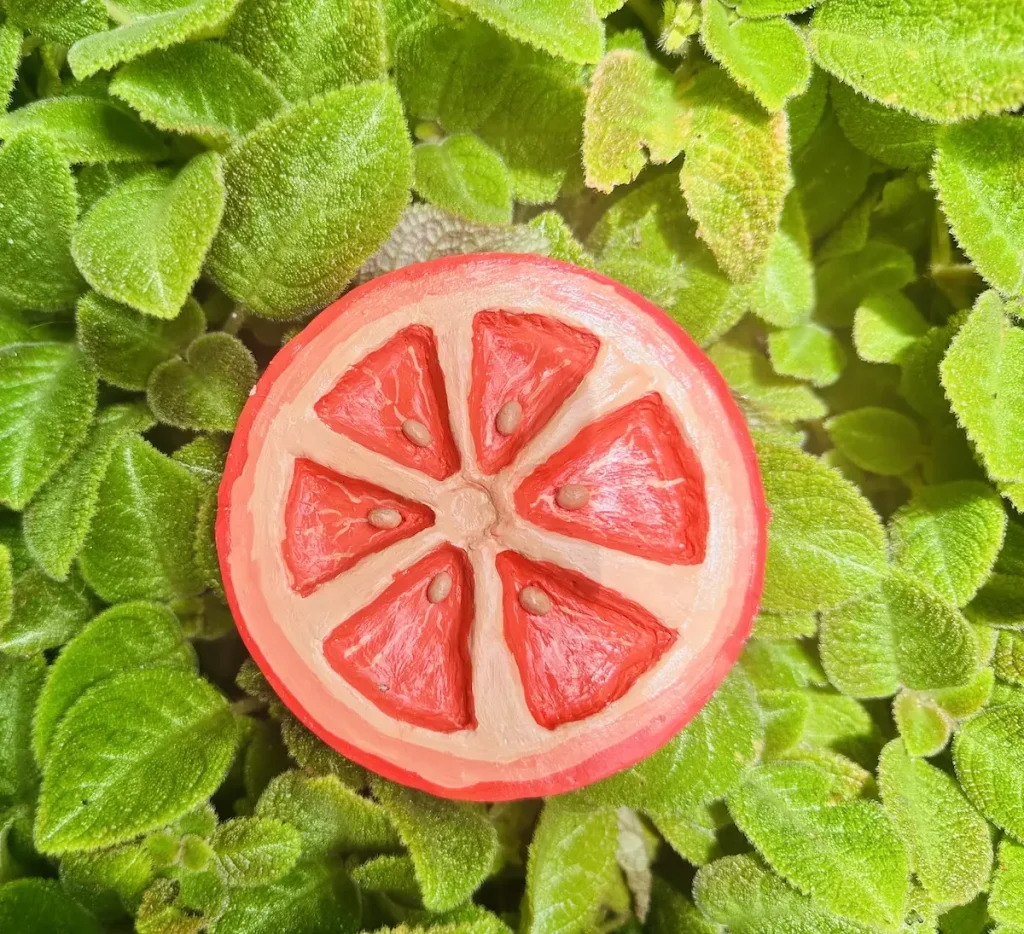
Don’t worry or panic. I’ll tell you why I think like that and why you should keep your air dry clay products indoors even after sealing with the world’s best waterproofing sealer. 🛡️
Keep your air dry clay indoors
Never ever keep your air dry clay projects, items, and decor outdoors because air dry clay absorbs moisture, weakens the clay, and forms a muddy-like texture. ⛈️
Air dry clay is a highly porous material that sucks out moisture as soon as it comes into contact with water. When you keep it in a dry environment with low environmental humidity, the water inside will evaporate and it dries in the air.
But have you thought about what happens when you keep it outside?
I was planning to make a fairy house with air dry clay for my garden but ended up giving up because I came to know that even after you sealed it with a top waterproof sealer, the environmental forces break down sealants and attack the porous core beneath.
Moisture will always find a way to sneak into the clay through the sealant and damage it. 💧 When dried air dry clay gets contact with water, it will weaken, lose its joints, and form cracks due to uneven shrinkage. 💔 Therefore, I never recommend anyone make outdoor items with air dry clay. There are better clay types designed for that. ✅
Read: How Long Does Air Dry Clay Take to Dry? (And How to Speed It Up)
Why even the “Best” waterproof sealers fail outdoors
Some might say you can protect air dry clay both indoors and outdoors after applying that sealer. But that’s just a marketing gimmick. 🚫 Don’t fall for that.
Here’s how environmental elements attack the waterproof sealers and try to reach the air dry clay underneath: 👇
Temperature changes
The temperature fluctuates so rapidly outside compared to inside: hot daytime and cool nighttime. 🌡️ Yes, in the early days, your weatherproofing sealer may hold up, but when the days go on with those continuous temperature changes, it breaks at one point. 📉
When the sealer is exposed to extreme temperature levels and direct sunlight, it becomes rigid and inflexible. But as soon as the sun goes down, it becomes flexible again. When this happens over and over for days, weeks and months, the sealant develops cracks.
As soon as this happens, the outside moisture will sneak into the air dry clay underneath through those cracked areas and damage the clay.
UV damage
When you keep air dry clay outside, it is exposed to direct sunlight. Direct sunlight contains harsh UV rays that can attack and damage the sealant of your air dry clay project.
It is ok if the sealant is exposed to UV rays for a little time, but when it gets exposed to UV rays for hours every single day at the same time, I’m sorry, my friend, it won’t hold.
UV rays damage the sealant and cause cracks, and eventually your air dry clay inside also gets cracked and damaged.
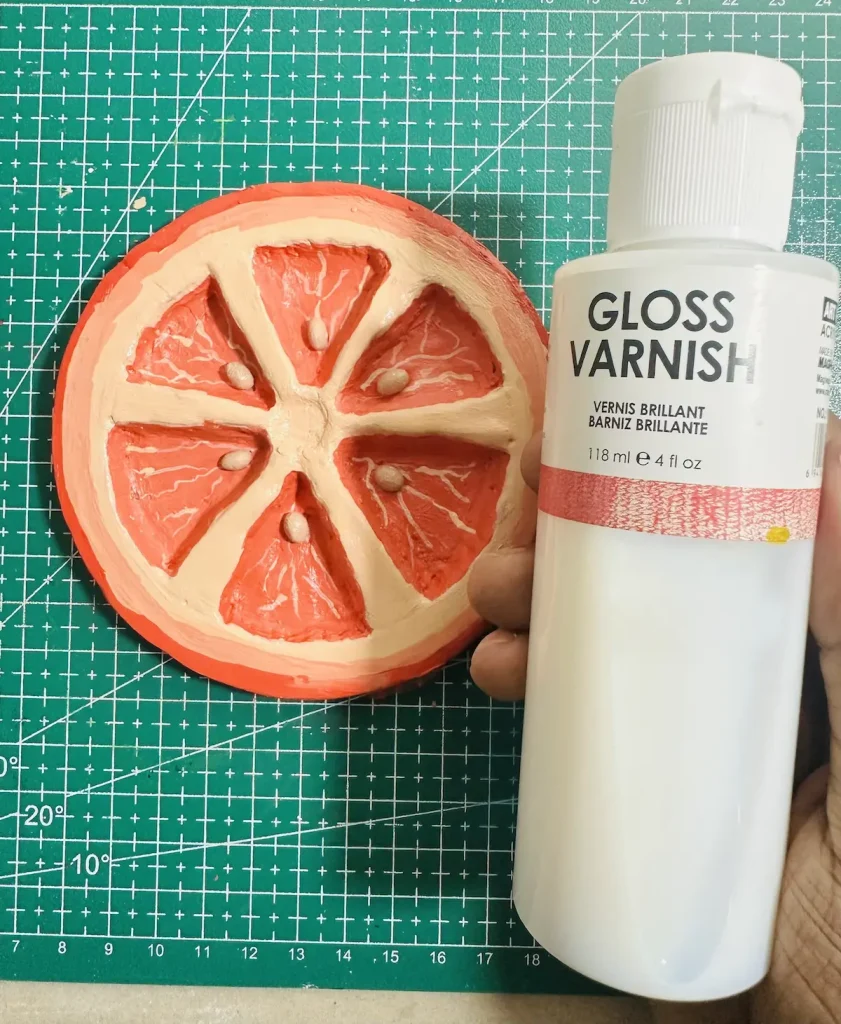
Also, if you sealed your air dry clay project with Mod Podge, polyurethane, or gloss varnish, as I do, they turn yellow over time due to UV degradation. 🟡 This will cause them to lose their shine, and you’ll no longer get that glossy finish.
Plus, they will turn brittle and permeable over time.
Micro-cracks and pinholes
When you apply sealer on your air dry clay project when it is dry after painting or without painting, brush strokes or uneven spray application leave micro gaps in the sealer.
When the outside humidity becomes high, moisture tends to sneak into the clay inside through those microscopic gaps.
Actually, it’s so hard to seal without leaving a single brush stroke. But you can reduce leaving brush strokes by applying 2–3 coats of sealer. 🖌️ I know because I seal all my air dry clay projects with 2–3 coats of gloss varnish, and every time, one or two brushmarks will be there. Those are the micro-gaps that help moisture to get inside, especially outdoors. 💧
As you see, because of the above reasons, keeping your air dry clay project outdoors is not the wisest thing to do, even after applying a quality sealer. ❌
What actually happens to air dry clay outside?
Below, I have broken down what happens when your air dry clay is exposed to different environmental conditions because we live in different climates and air dry clay behaves differently for each.
- In the rain: Upon raining for days, the water will eventually find a way to reach the air dry clay inside and cause it to melt and dissolve from the inside out. This weakens the clay, deforms it, and eventually ruins the project
- In direct sun: When air dry clay is exposed to direct sunlight for so long, its color starts fading and it becomes brittle with cracks. Due to UV rays, the waterproofing shell around become flexible and forms cracks.
- In winter: Due to the porous nature of air dry clay, it retains water. When winter comes, the water inside freezes and forms cracks. Because the volume of frozen water is higher than that of liquid water, as it expands by about 9% when it turns into ice. Due to this expansion of volume, the air dry clay cracks.
Best clay types for outdoors
Don’t use air dry clay for outdoors, use these instead,
- Polymer clay: polymer clay is great for making miniature projects for outdoors. It dries by baking in a domestic oven at low temperatures. You can seal it with water based polyurethane, UV resin or polyurethane varnish before placing it outside. Polymer clay can hold up well again enevironemntal elemnts like rain, UV rays and winter.
- Epoxy clay: Epoxy clay is durable and can withstand extreme outside temperature levels and moisture without breaking up like air dry clay.
- Traditional kiln-fired ceramics: This is great for making pots, planters and bowls for outdoors. They can withstand rain, direct sunlight and other elements. They do not crack or absorb moisture from outside like air dry clay.
How to protect your outdoor air dry clay project right now
- Immediately take it inside.
- Let the project dry fully.
- Take your time and identify all the cracked areas (even the micro cracks).
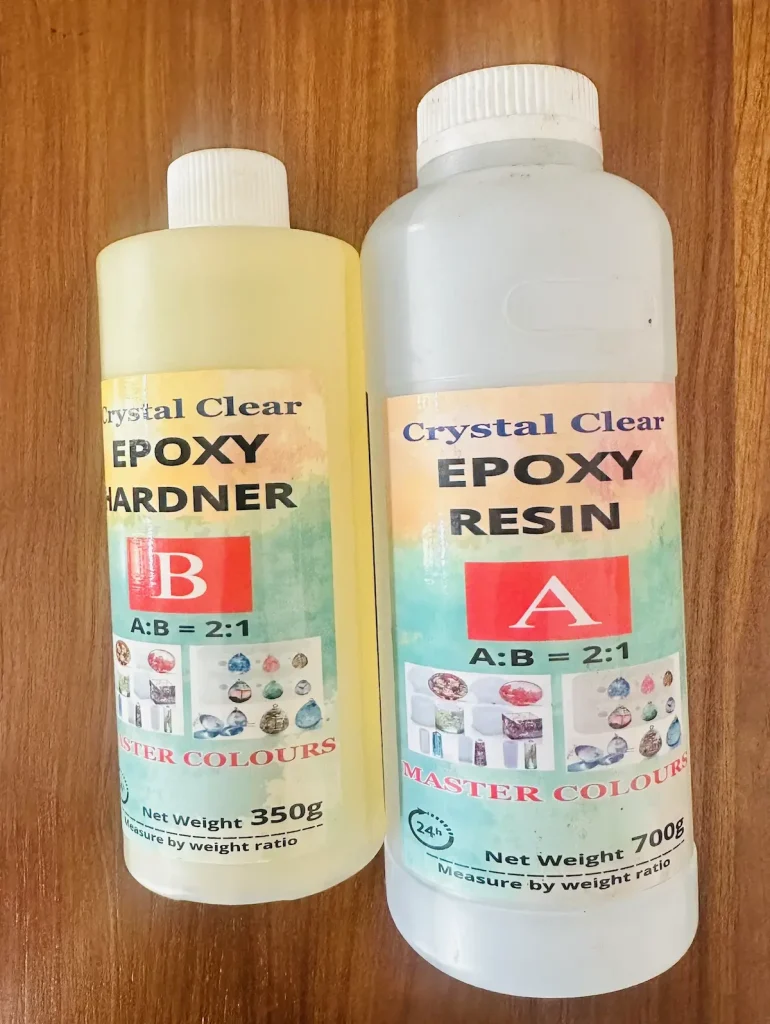
- Reseal all the identified cracks using a proper sealer like gloss varnish, UV resin or epoxy resin or polyurethane.
- Let the sealed piece dry and cure fully for 24-48 hours.
- Keep it indoors.
Simple as that! No air dry clay for outdoors anymore!
FAQ
What happens if air dry clay gets wet?
When air dry clay gets wet, moisture weakens the clay inside, it loses its joints, and forms a muddy-like texture. 🫠
Can you waterproof air dry clay for garden gnomes?
Yes, you can waterproof air dry clay for garden gnomes by sealing with polyurethane varnish or epoxy resin. But it won’t hold up long because air dry clay is not good for outdoors. 📉
What type of clay is best for outdoors?
Polymer clay, after sealing with water-based polyurethane, is best for outdoors. 🏆
How long does sealed air dry clay last outside?
Air dry clay can last outdoors only a couple of days under extreme heat, continuous rain, or winter. If the weather is good, it may last for a few weeks or months. But sooner or later the project will get ruined.