
Sealing your air dry clay project is a must for long-term protection from moisture. Otherwise, moisture will get inside the air-dry clay and through its tiny porous structure and dissolve or weaken the clay. This causes uneven shrinkage and cracks on the surface.
But you should not seal your air dry clay project with cheap, not suitable products like nail polish lol. Yes, once I sealed one of my trinket trays with my wife’s nail polish, and paint started peeling off due to its harsh solvents.
But what about epoxy resin? Is it a quality sealer for your air dry clay project? Does it protect your project from moisture and give nice appeal at the same time? 🤔
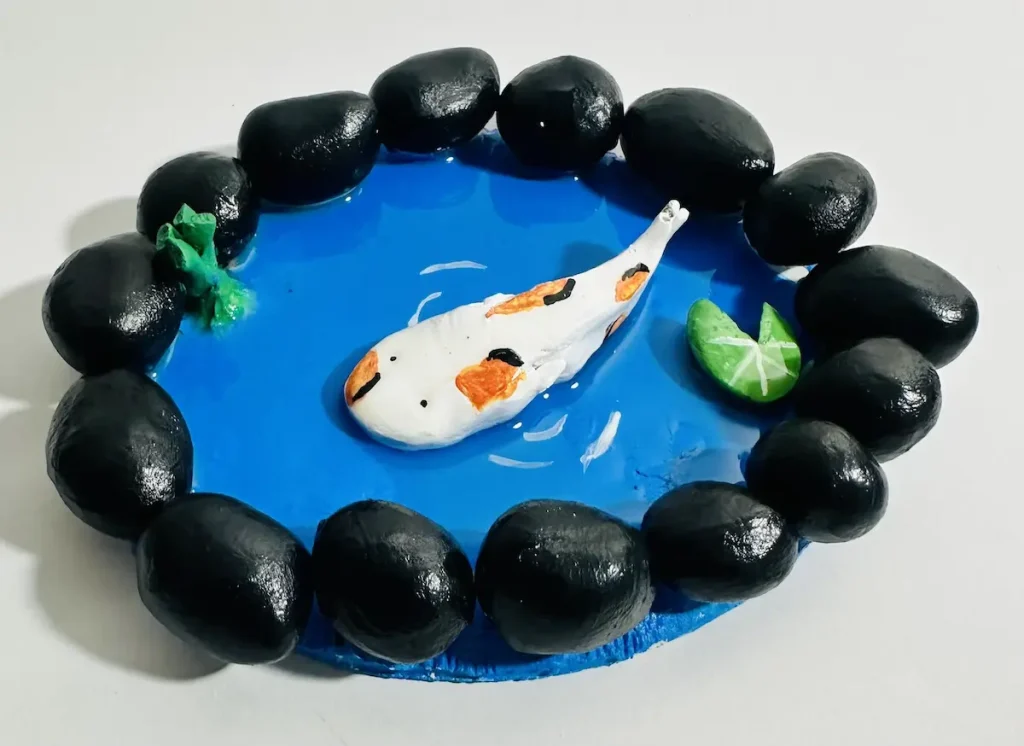
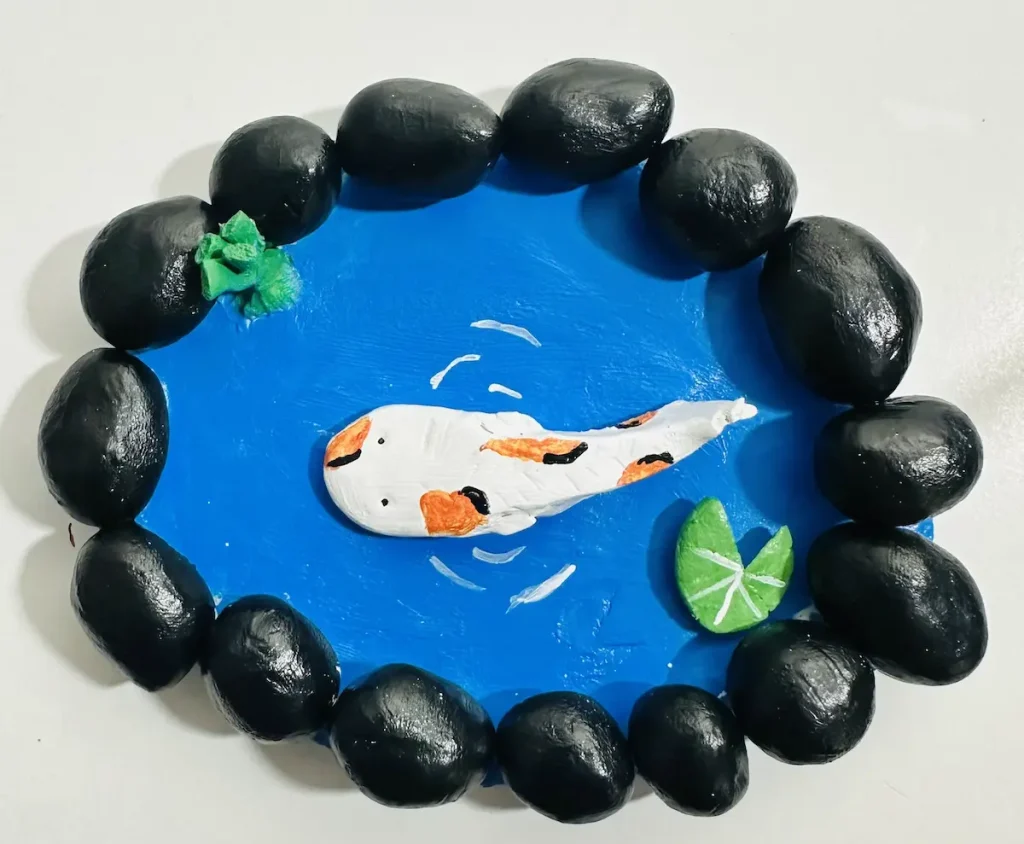
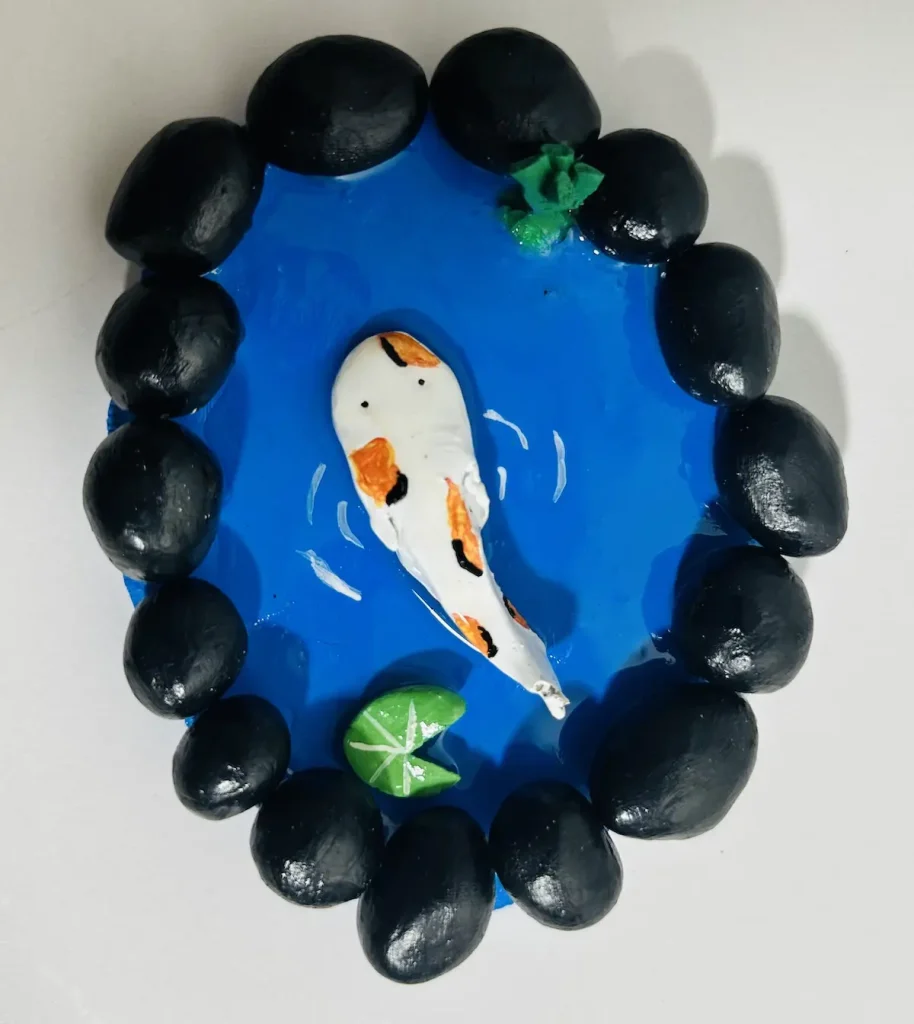
I tried epoxy resin on my latest air dry clay koi fish pond, and let me share how I applied it and my experience with it. What are the goods and bads?
Let’s dive in! 🗣️
Can you put epoxy resin on air dry clay?
Yes, hundred percent, you can put epoxy resin on air dry clay. But not only the resin. You should combine epoxy resin with its hardener in 1:1 ratio. This epoxy resin and hardener combo is also known as two-part epoxy resin.
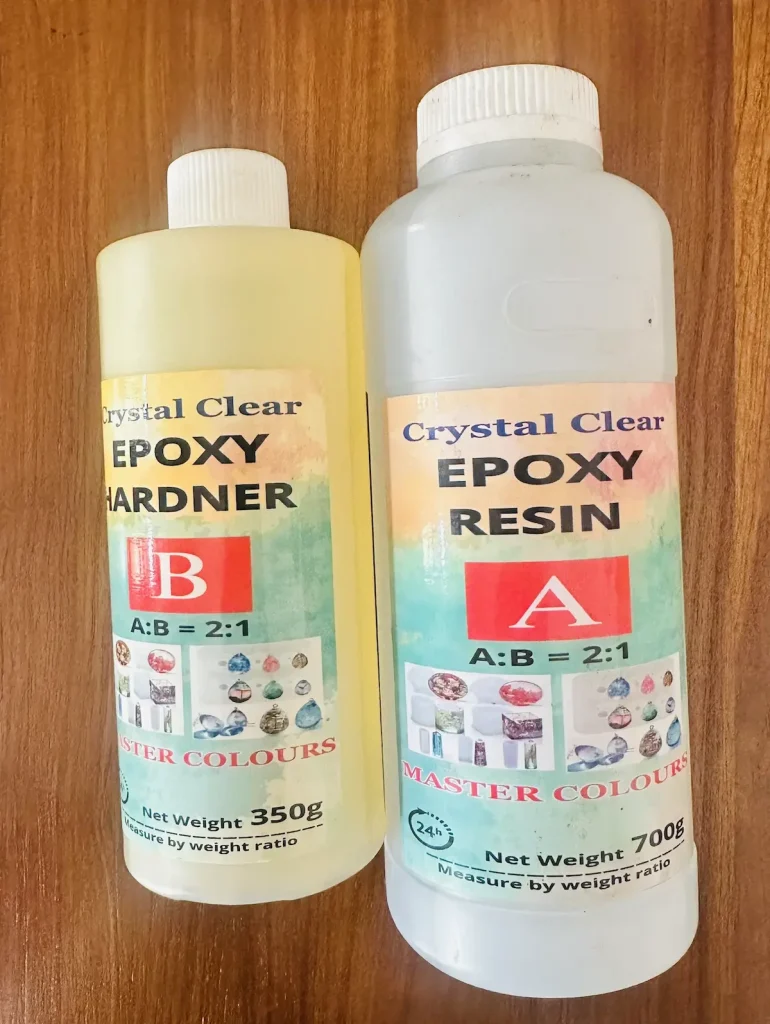
Epoxy resin only does not dry on its own like many other sealers like varnish, polyurethane and spray coatings.
It does not “dry” by losing moisture like acrylic sealers. It hardens through a chemical reaction called curing. For that, epoxy resin needs a hardener.
Usually, epoxy resin comes with the hardener, so you don’t have to worry much. But the more you know, the better you look. 😎
Plus, you need to make 100% sure air dry clay is completely dry before putting epoxy resin on it, because if there is moisture inside of your air dry clay project, it will interact with epoxy resin.
This will prevent the resin from curing properly or cause it to peel and form bubbles. Plus, it will give a dull look to your project.
What happens when you put epoxy resin on air dry clay?
Make sure your air dry clay project is painted with acrylic paint or any other water-resistant coating before applying the epoxy resin. Because moisture inside tends to react with epoxy resin.
Don’t paint air-dry clay with watercolors because too much water will ruin and dissolve your air dry clay project and you can’t apply epoxy resin over it.
When you apply epoxy resin over your painted air dry clay project, it creates a hard, glossy, and waterproof seal. Even though it creates a hard shell-like surface over air dry clay, it still breaks if dropped. So, better not throw your project on the ground! 🚫
Why I decided to use epoxy resin on air dry clay
Let me show you all the advantages you can get by using epoxy resin compared to other sealers.
- True waterproofing sealer: Epoxy resin provides a waterproof sealer over air dry clay. Most popular products on the market which are Mod Podge, PVA, Acrylic Varnish, and Gloss varnish only provide water resistance. They fail under continuous moisture. 💧
- Beautiful glass like finish: Yes, gloss varnish and many other sealers give you that glossy shiny look. But if you want that professional glass-like finish, you should absolutely go with epoxy resin.
- High structural strength: Plus, epoxy resin improves the structural strength of your air dry clay project. As I told you earlier, the hard shell it forms outperforms any coating in terms of strength. It’s a thick, rigid, impact-resistant layer, not a thin film that scratches easily. 💪
- No brush marks: Epoxy resin leaves no brush marks like other sealers which often dry with visible brush strokes or uneven textures. ✨
- High stability: Epoxy resin is stable under any weather condition even when its dry, humid or wet. Other sealers may become tacky over time.
Plus, epoxy resin helps to improve durability of your clay project because it prevents chipping, cracking, and surface wear over time.
Epoxy resin is a heavyweight champion compared to Mod Podge, PVA and acrylic varnish which are basically like high school bullies. 🥊
Things to consider when using epoxy resin on air dry clay
- Wear respirator and gloves: Epoxy resin contains VOCs (Volatile Organic Compounds). It releases harsh chemical vapors and fumes into the air. 😷
- Mix with hardener before use: As I told you, you need to mix epoxy resin with its hardener in a 1:1 ratio before applying over your air dry clay project. This combo comes as two-part epoxy resin. 🧪
You don’t need a measuring cup, just try your best to add approximate equal volumes and mix thoroughly. That mixture can be poured over your air dry clay project to seal.
- No moisture inside: Make sure your air dry clay project is super dry before applying epoxy resin because moisture inside may react with the resin and cause peeling. 🏜️
- Avoid form bubbles: You can apply epoxy resin on air dry clay as layers, but make sure not to let it form bubbles. You can remove formed bubbles using a heatgun.
- Let cure well: Let the project you seal with epoxy resin cure for 24-48 hours. Less curing time results in a sticky, tacky surface, peeling, and warping.
- Work and let it dry in a well-ventilated area: Since epoxy resin releases harsh fumes upon drying, let the sealed project dry in a well-ventilated area. Same when you’re sealing with it. 🌬️
How to apply epoxy resin on air dry clay
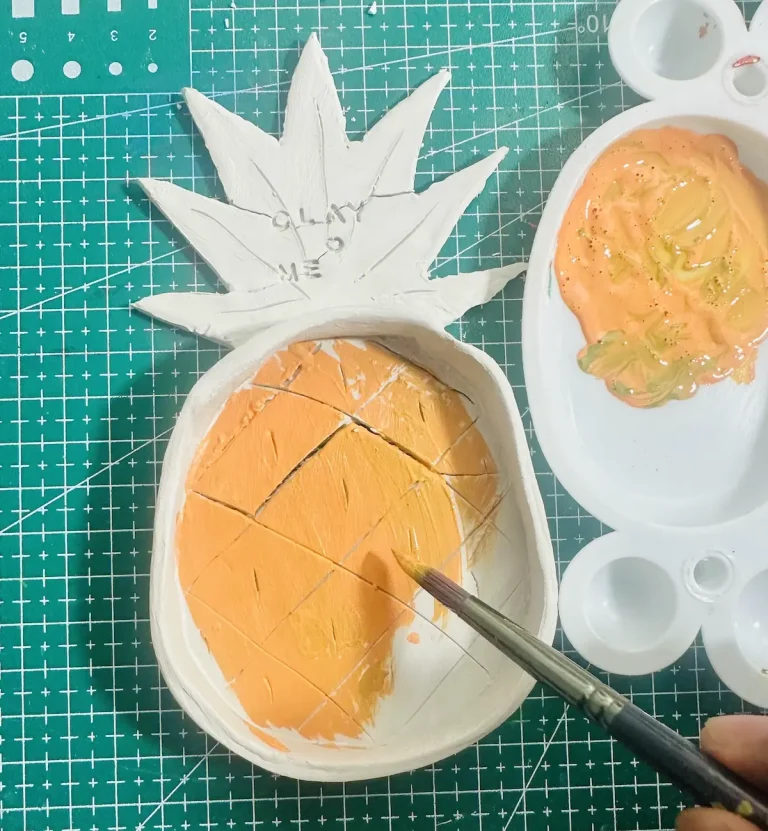
- Once you finish making and shaping your air dry clay project, paint with acrylic paint and let it dry for 2 hours.
If you’re not using acrylic paint, add a primer or base sealer before applying epoxy resin on air dry clay. Acrylic paint has a water-resistant coating itself act as a sealer. Therefore, no need of another sealer.
Painting and sealing the porous clay first before putting epoxy rein prevents the resin from soaking in and causing dark spots. When I was sealing my clay pond, i only coated with acrylic paint.
2. Wear a respirator and gloves before opening the epoxy resin bottle. I’m sorry guys, I couldn’t find gloves in my case. But you must wear both. Safety comes first! 🛡️
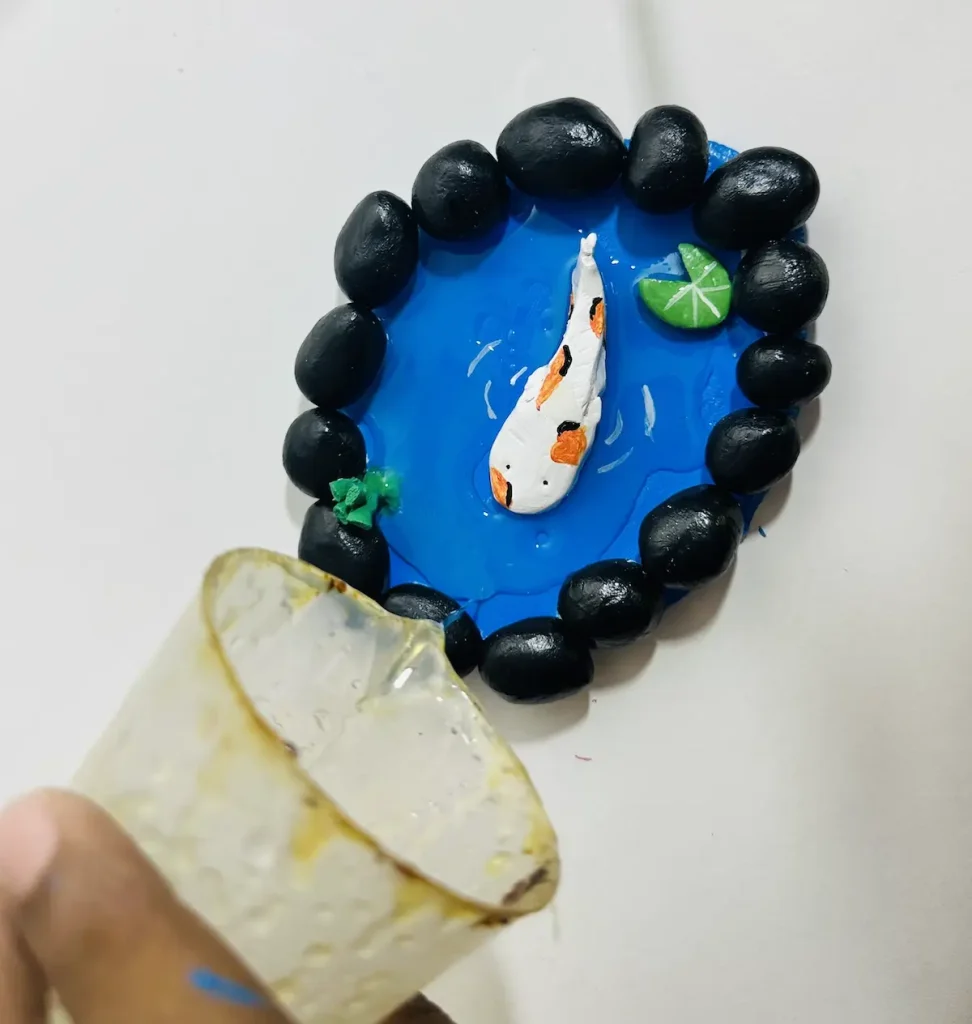
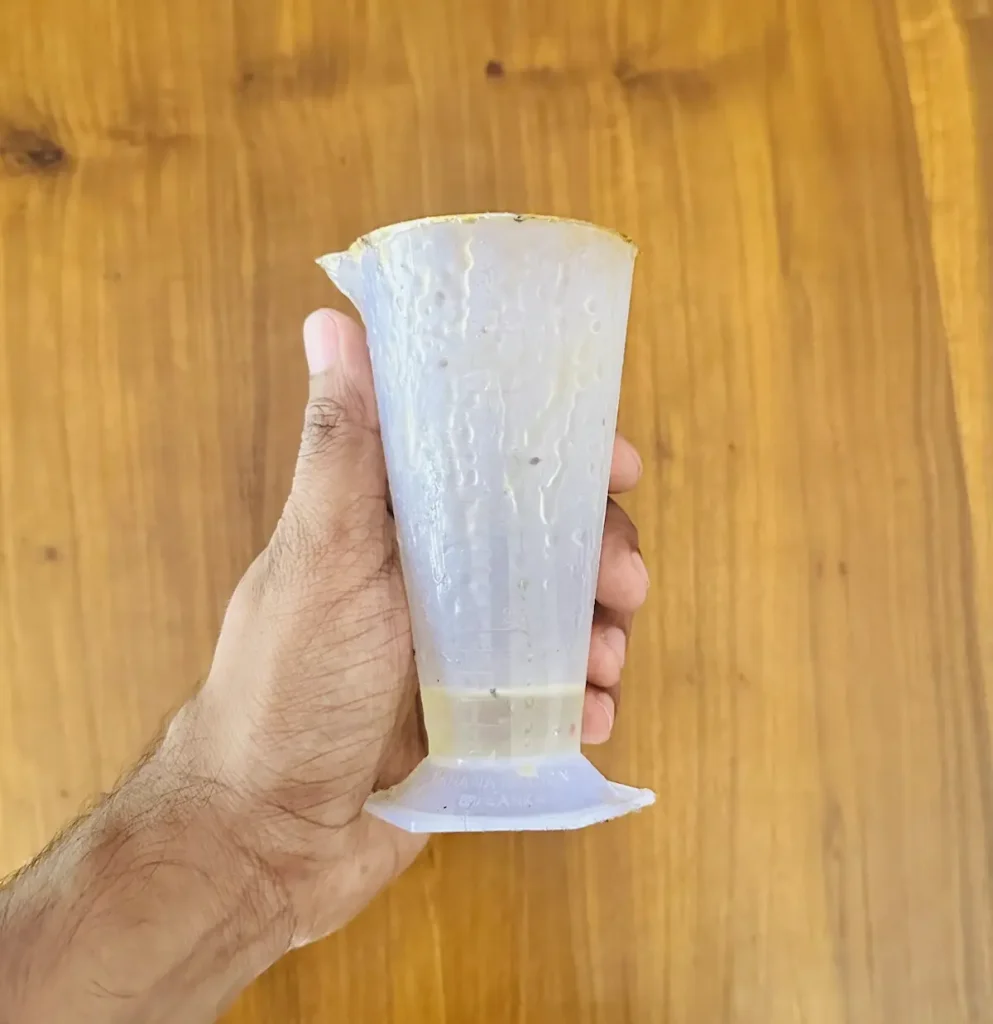
3. Take epoxy resin and its hardener and mix thoroughly after taking little bit from both equally in a plastic cup.
4. Now, pour the mixed epoxy resin on top of your air dry clay project.
5. Use a paintbrush and evenly apply epoxy resin over your project in one direction without leaving spaces. 🖌️
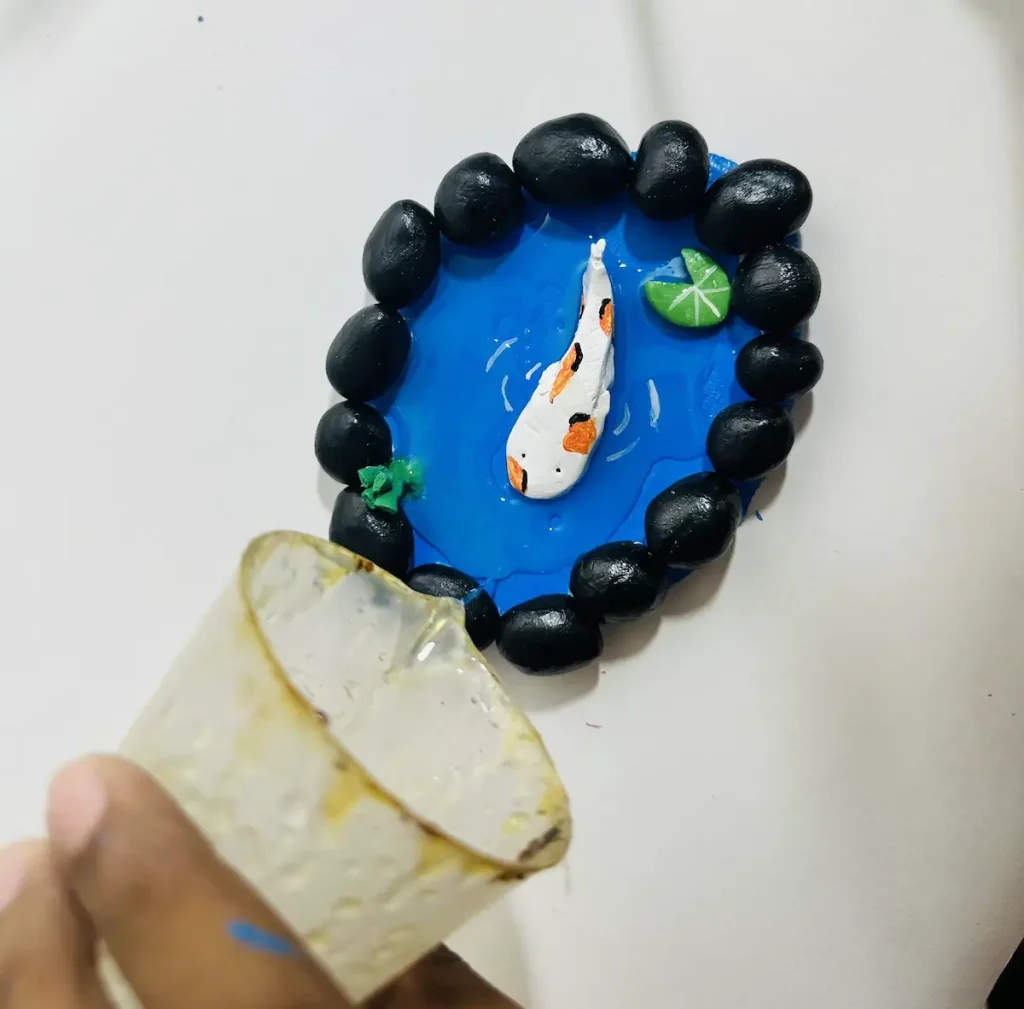
Since I was sealing my koi fish pond, I add several layers of epoxy resin to get the water texture (which is like glass finish) and also I used epoxy resin as a glue to sit my koi fish in the pond.
I think if you want water texture or glass like finish epoxy resin is the best. I tell you by experience.
Just make sure not to let it form bubbles when you apply in layers. You can remove bubbles using a heat gun. But if you’re making water texture, bubbles are ok because water do have bubbles right? Haha.
6. After covering the whole clay surface with resin let it dry and cure for 2 days in a well ventilated area.
Place your project elevated, so it doesn’t stick to the table. I elevated my sealed clay pond using a bottle lid.
Plus, don’t leave it in sunlight during the curing period because that can cause discoloration and uneven drying. ☀️
Now that’s how you seal any of your air dry clay projects with epoxy resin! Simple with the right techniques and gives a better finish than most. ✨
I recommend you to use epoxy resin when your project is large that need deep shine and heavy protection. For small projects, use gloss varnish. It is quicker and easier to use.
Most similar sealer to epoxy resin
UV resin is the closest friend of epoxy resin. Both are so similar visually and physically. Epoxy resin and UV resin both cure into a thick, crystal-clear, and ultra-glossy plastic shell. 💎
Epoxy resin needs its hardener to cure while UV resin needs UV light. 💡
Epoxy resin is best for large air dry clay trays, dishes and deep pours while UV resin is good for small projects like jewelries.
Final thoughts
Now you know what epoxy resin is capable of as a sealer when it comes to air dry clay. 🎨
Epoxy resin is the best finish for your air dry clay projects if you want an ultra-glossy, glass-like finish. But you should mix it with hardener before use. Do not let it touch water upon curing. 🚫💦
Now its your chance to use it. I’d love to see clay projects you sealed with epoxy resin, because they are unique. Many people follow the trend by using varnish or UV resin. But you must be special if you seal your project with epoxy resin.
Be sure to tag @clayandmestudios in your clay projects sealed with epoxy resin. Until next time! Cheers! 🤟🏾