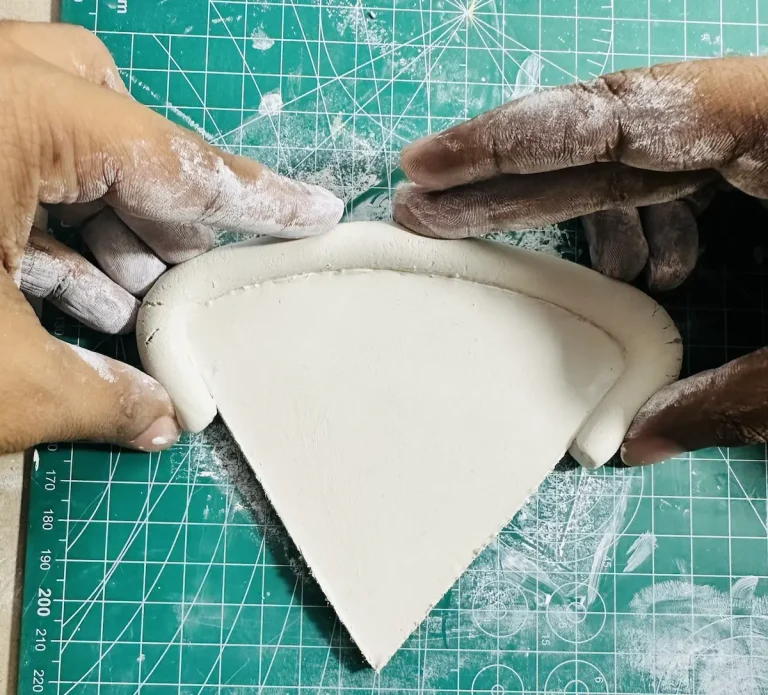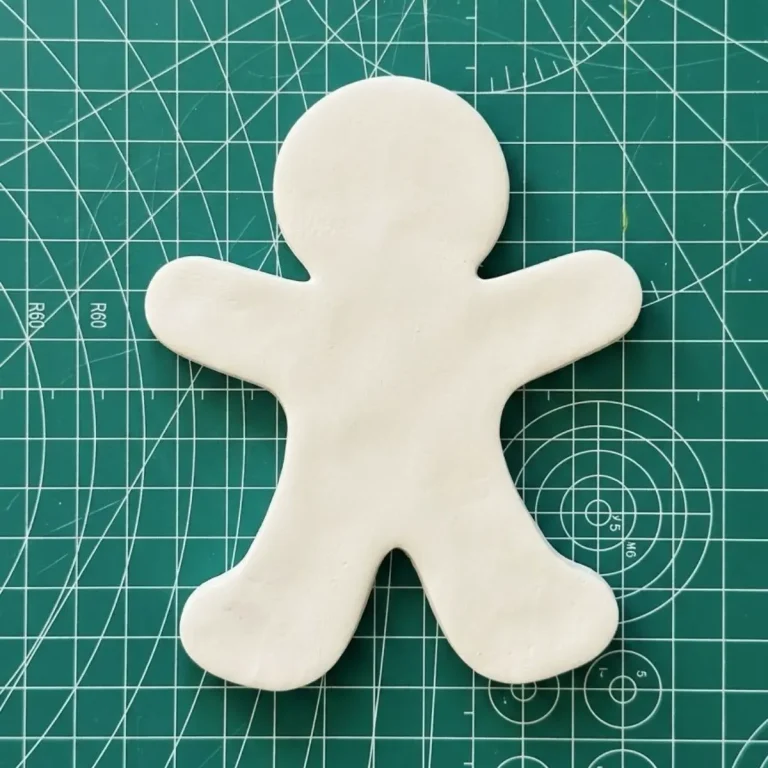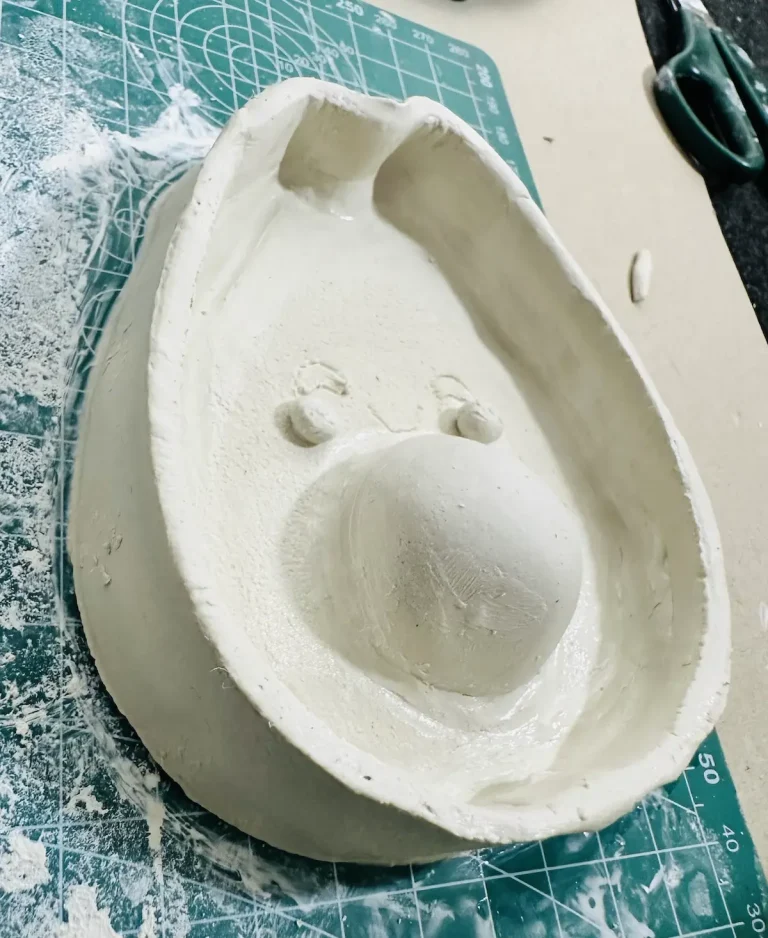

Let me share a story that happened to me, and it might have happened to you as well. While I was making an avocado trinket tray with air-dry clay, the remaining clay became too dry and crumbled while I was making the base. Later, when I went to use more clay for the tray’s rim, it was already too dry and had no moisture left.
Have you struggled with this issue as I did? Don’t worry, I’ll help you with my experience.
I’m also a beginner like you and I’ll share with you friends what simple techniques I use while making my projects to keep the air dry clay as soft as possible.
Keeping the air dry clay moist and consistent is essential to shape it as we want. Moisture in the air dry clay helps prevent the clay from cracking and crumbling and maintain the flexibility.
Hold on! I’ll explain more in detail. Let’s dig in!
Why your air dry clay dries out so fast
Air dry clay is a highly porous material with lots of moisture and air pockets inside. When you take the clay out, it is exposed to the environmental elements outside starts water evaporation, which makes the clay dry out fast.
Let me show you why that happens.
Humidity
As soon as air dry clay is exposed to the air, the moisture inside will start to evaporate because wet air-dry clay contains a high amount of internal moisture compared to the surrounding air.
In order to balance the moisture difference, water evaporates, making the clay dry.
When the outside humidity is high, the moisture evaporation speed of air dry is slow and it won’t get dried quickly. But when the outside humidity is low, the moisture of air dry clay evaporates faster, making the clay dry quickly.
Airflow
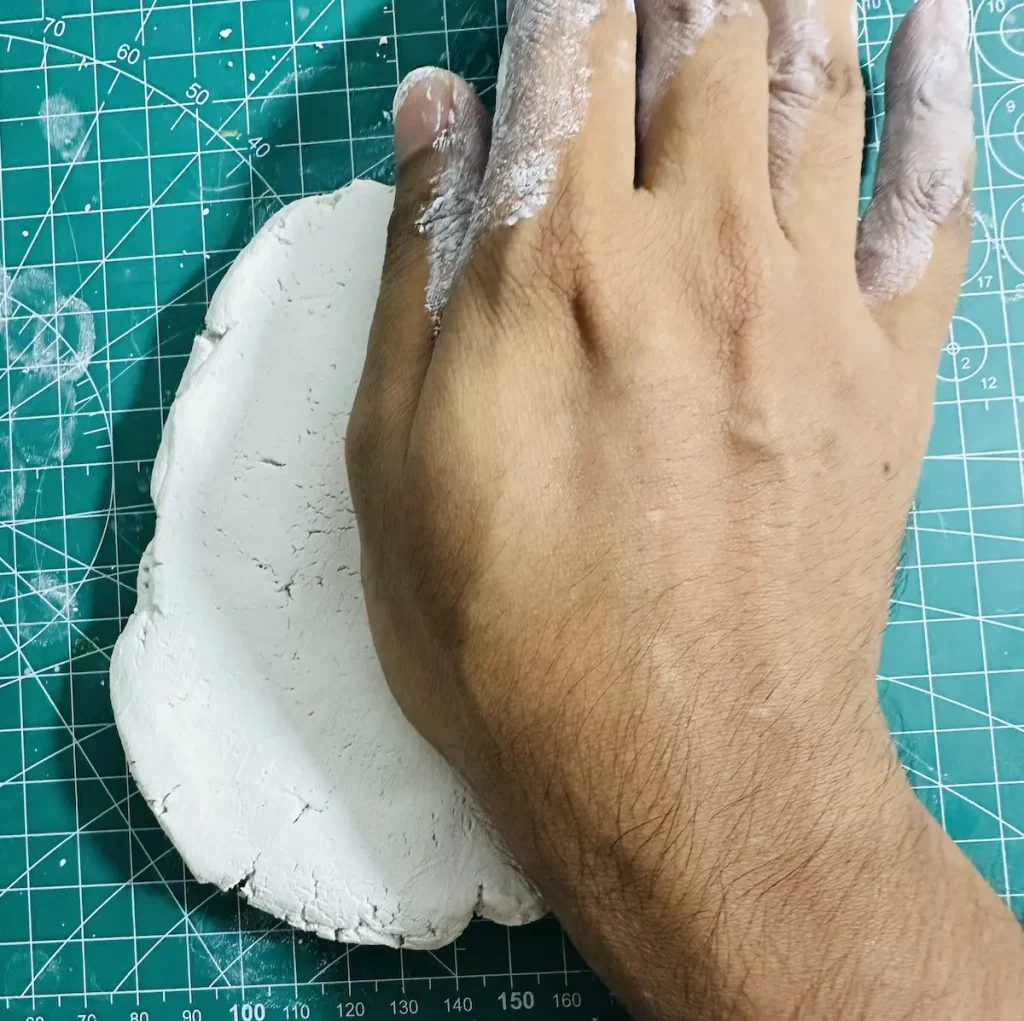
Moving air increases the water evaporation speed of air dry clay. When you’re making air dry clay project under a fan or near an open window on a windy day, or directly facing in the path of an air conditioning vent, the air hits the outside clay layer continuously at high speeds.
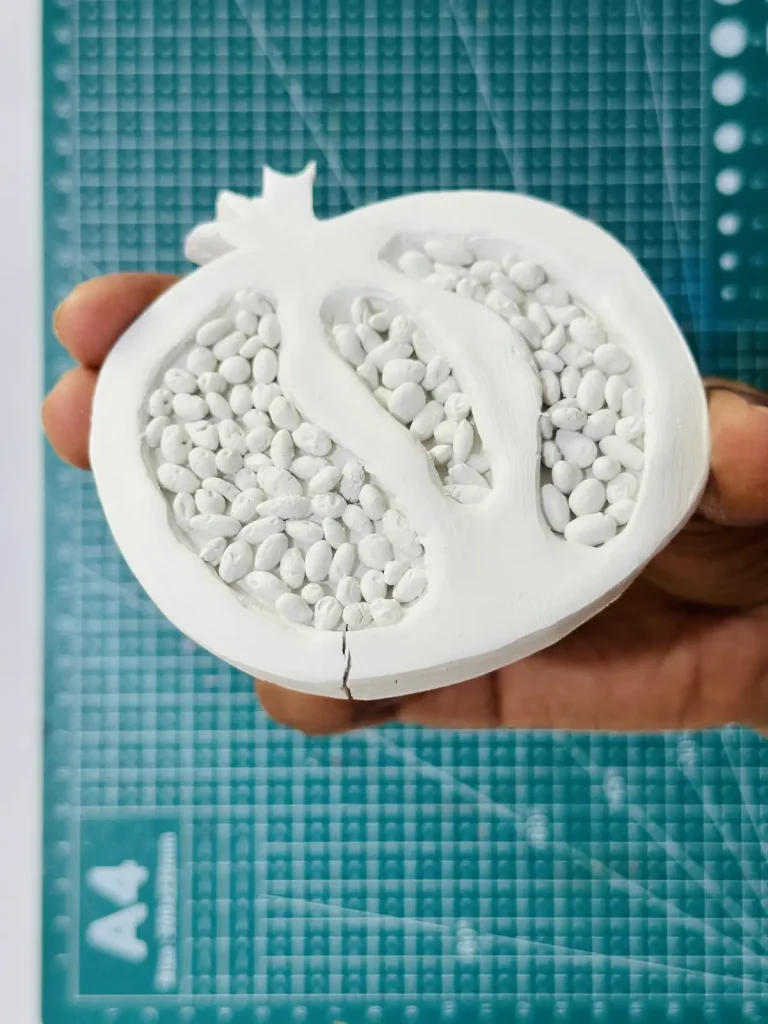
This makes the outside air dry clay layers dries faster while the inside remains soft. Actually, this is a huge issue because air dry clay outside shrinks faster than inside, causing uneven shrinkage. Uneven shrinkage is one of the main reasons for the structural cracks of air dry clay.
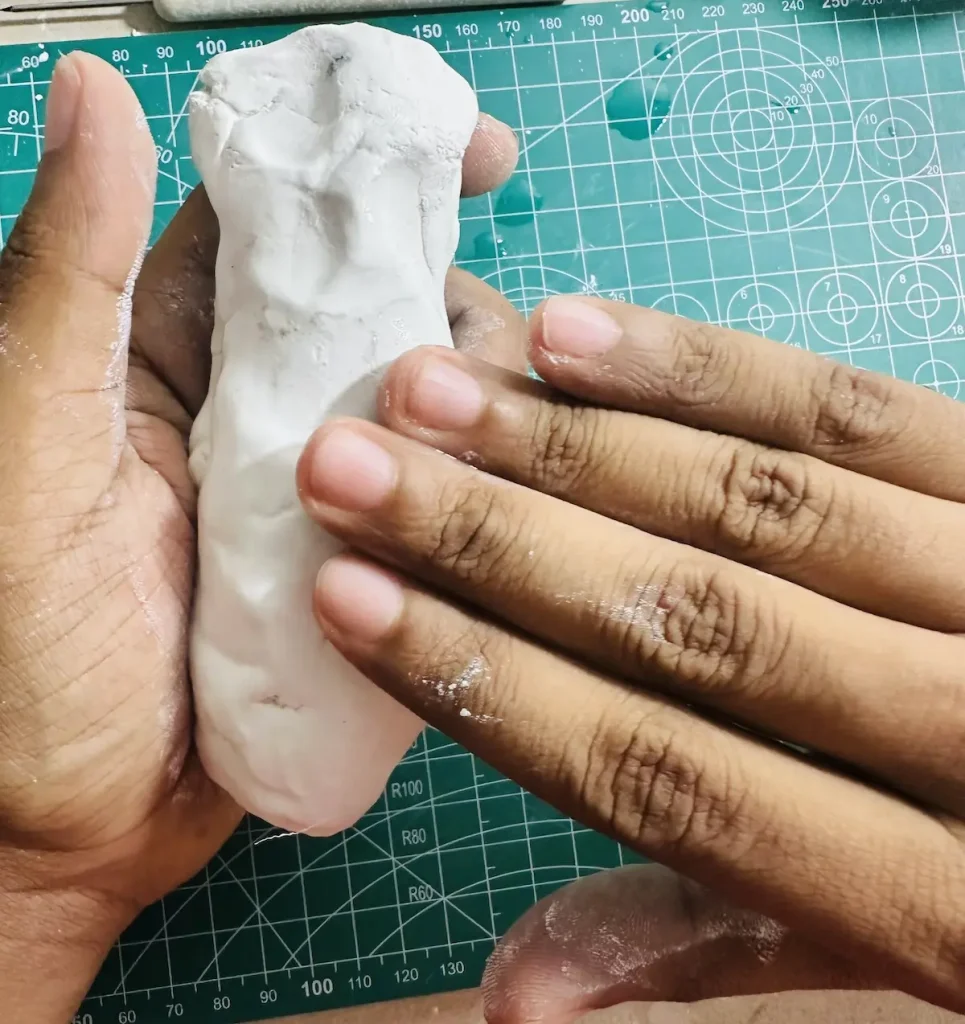
Temperature
Generally, a hot room or working under a high-watt hot bulb increases the moisture evaporation speed of air dry clay, making it dry faster than working in a cool environment.
So basically, the main reasons why your air dry clay becomes dry while working are low environmental humidity, high airflow and high temperature levels outside.
Best ways to keep air dry clay soft while working
Now let me show you how you can control the elements you can and delay the drying of air dry clay until you finish the project. Trust me, I know how annoying it is to work with dried air dry clay.
Work in small pieces
Don’t take the whole piece out and work with it. Take only the necessary and start working with it. You can’t even knead a big chunk of air dry clay at once. Go step by step and take little by little.
This way your wastage will also be reduced because you only take what is necessary.
In the early days, I completely unwrap the package and take out the whole chunk of air dry clay. I’d then cut off the piece I needed and leave the rest sitting on my desk while I worked, which caused it to dry out. I was a fool.
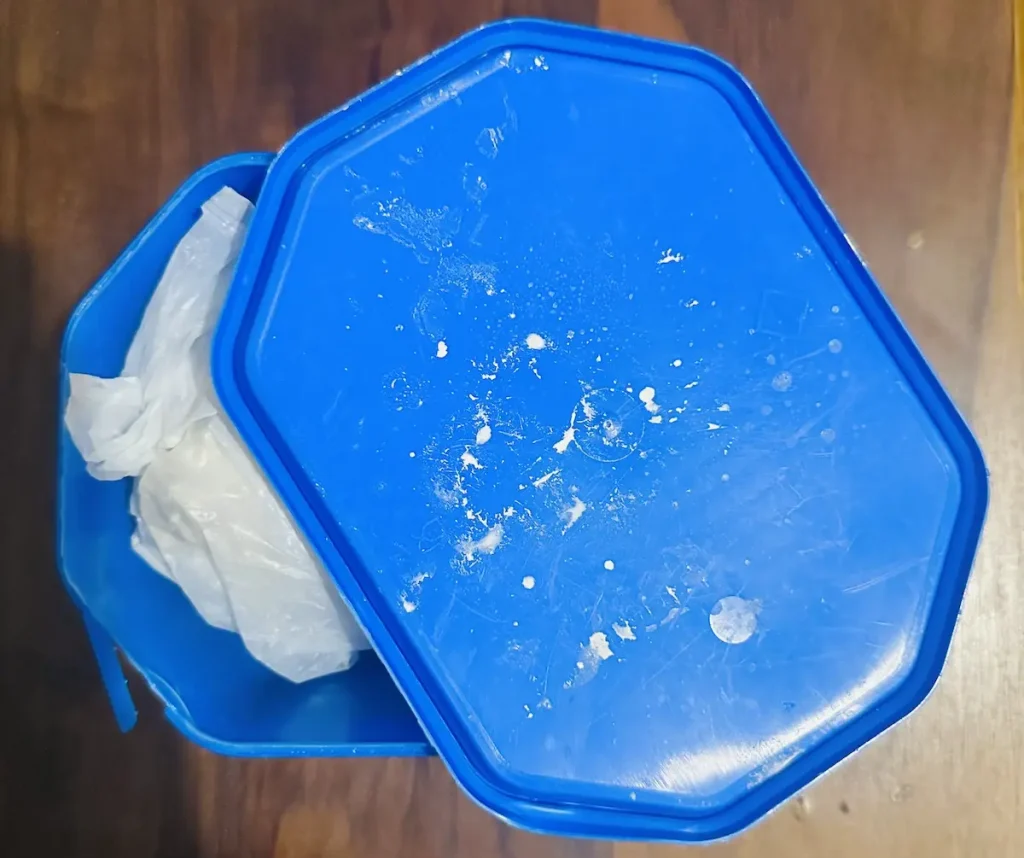
Use plastic wrap
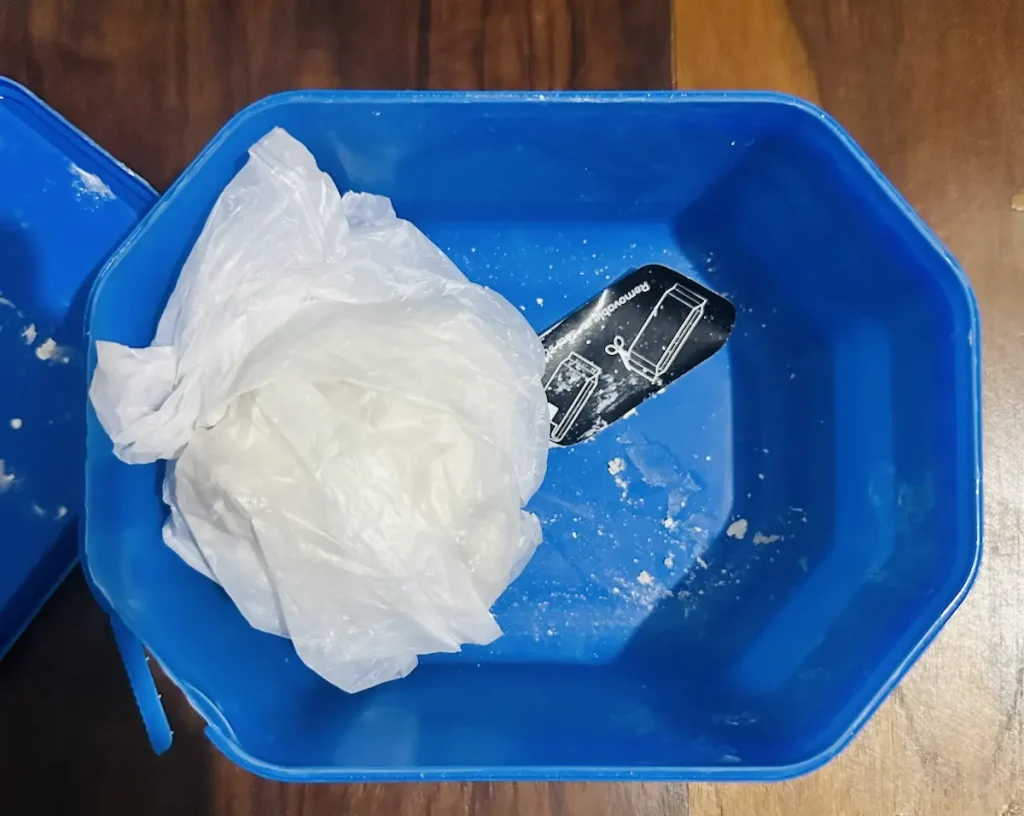
Now I take only the necessary piece of air dry clay from the package and cover the unused clay with the remaining package and wrap the whole package with cling film or a polythene bag.
This avoids the unused clay from being exposed to the outside air and stops the inside moisture from evaporating.
Use a spray bottle
When you’re working with air dry clay, spray a little bit of water onto the clay surface time to time to keep its moisture level consistent.
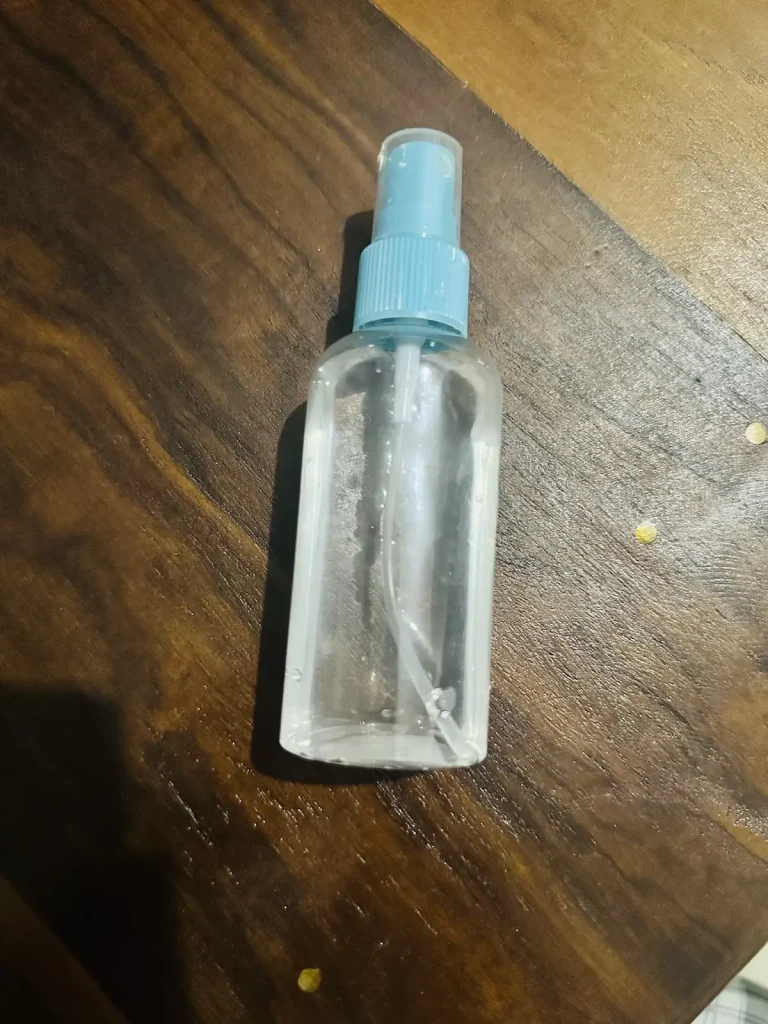
Even though a big amount of moisture evaporates due to high airflow, temperature or low humidity outside, you can regain the lost moisture amount by spraying.
But make sure not to spray water too much onto the clay because too much water causes a difference in evaporation speed between the inside and outside layers of air dyr clay. Basically, the outside layers’ moisture level increases because of this and can cause uneven shrinkage when drying, leading to surface cracks.
Therefore, only spray a little bit of water. Remember! Too much water is the worst enemy of air dry clay.
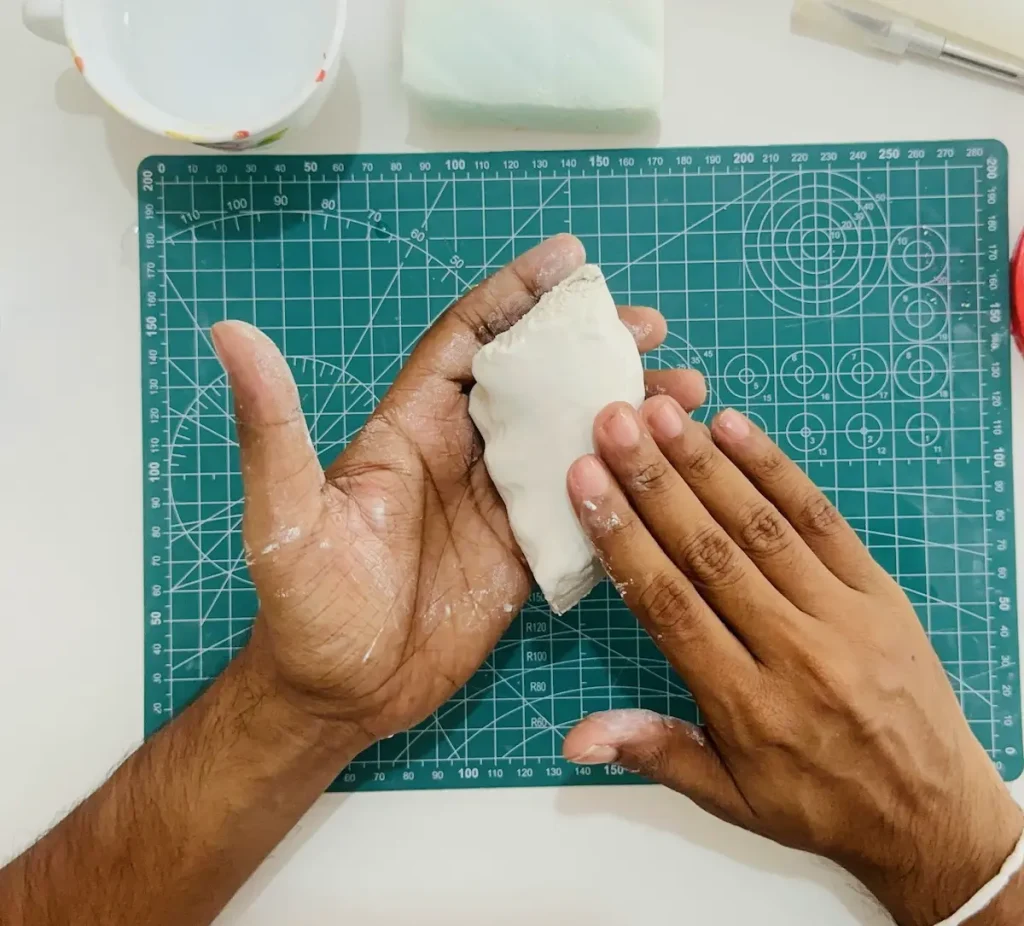
Moisten your palms and fingers
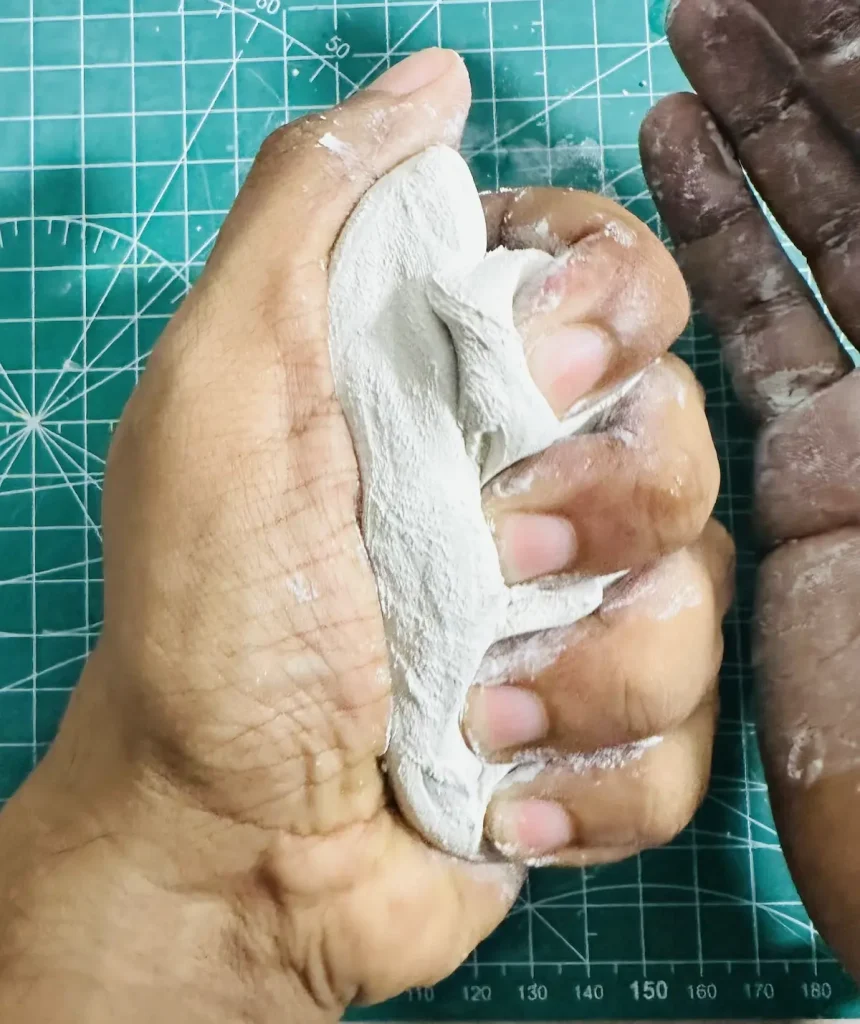
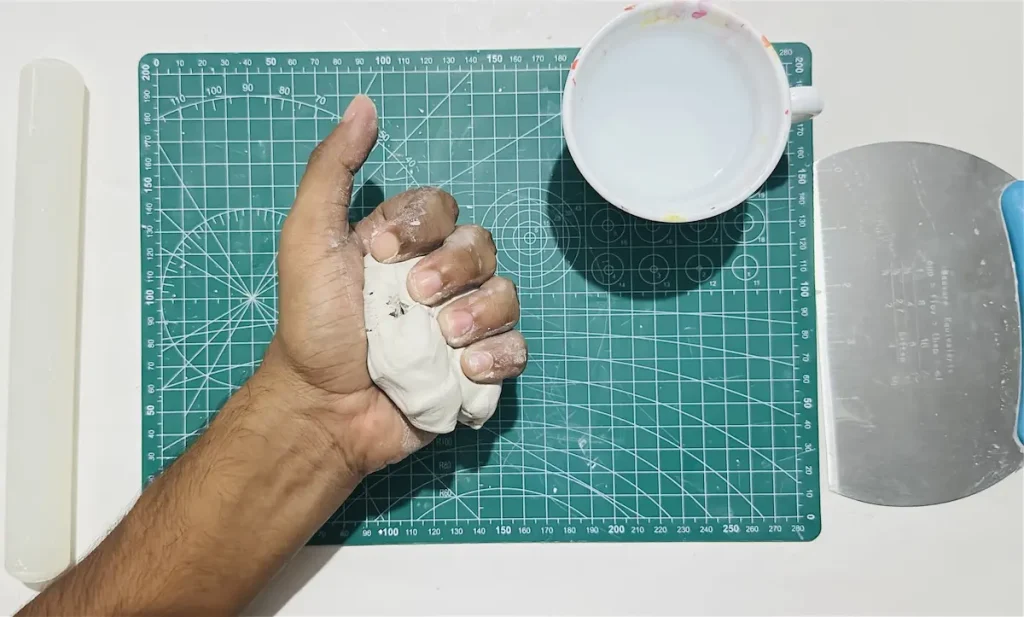
I use this method when kneading air dry clay. Dip your fingers in a cup of water and make them wet and spread a little bit of water on your palms. This helps to keep the air dry clay soft while kneading and shaping your project.
Tuff and hard air dry clay is hard to knead and shape.
How to soften air dry clay that has already started to harden
If the air dry clay has already started to harden, you can fix that by reconditioning and kneading the clay after tapping the surface with a little bit of water.
Water gives the lost moisture back to the clay and the temperature of our palms while kneading makes the clay soft again.
If the clay joints you made were started to loosen because of the clay hardening, you can try the “slip method”.
Slip is a mixture of air dry clay and water. You can make a slip by mixing tiny pieces of air dry clay with an equal amount of water and mixing them thoroughly. After mixing, let the paste sit for 2-3 hours until it becomes a creamy paste.
This slip works as a glue. You can use it to attach loose joints of your air dry clay projects and also to attach two air dry clay pieces together.
Common mistakes that lead to cracking and shrinkage
Air dry clay cracks and shrinks due to moisture imbalance. That happens due to the following mistakes,
- Adding too much water: never ever use too much water for kneading, shaping or smoothing out the clay. Too much water weakens the clay and increases the water evaporation speed when drying. This creates a tension between the air dyr clay layers and form cracks when drying.
- Uneven drying speeds across thick and thin pieces: Thin pieces dry and shrink faster than thick air dry clay pieces because the area that is exposed to the outside area is higher in thin pieces. But in thick pieces, the inside layers do not come into contact with air, and they dry and shrinks slower. When you attach two air dry clay pisces, one is thin and the other one is thick, the joint between them will break when drying due to the uneven shrinkage between the two pieces. Therefore, try to attach air dry clay pieces that are almost equal in thickness.
- Rushing the drying time: Let your air dry clay project dry slowly in a cool well ventilated area. Fast drying (keeping it in the sun, outside or using a heat source) leads to cracks on the surface because the outside layers dry and shrink faster than the inside layers.
Final thoughts
Now you know how to keep your air dry clay soft until you finish the project. If you are able to do that, you can safely wrap the unused clay piece and use it even for your next project as well. If you followed the above techniques carefully, you will be able to save a lot of money and that you spend on air dry clay.
I’ll see ya again with more useful air dry clay tips. Cheers! 🤟🏾