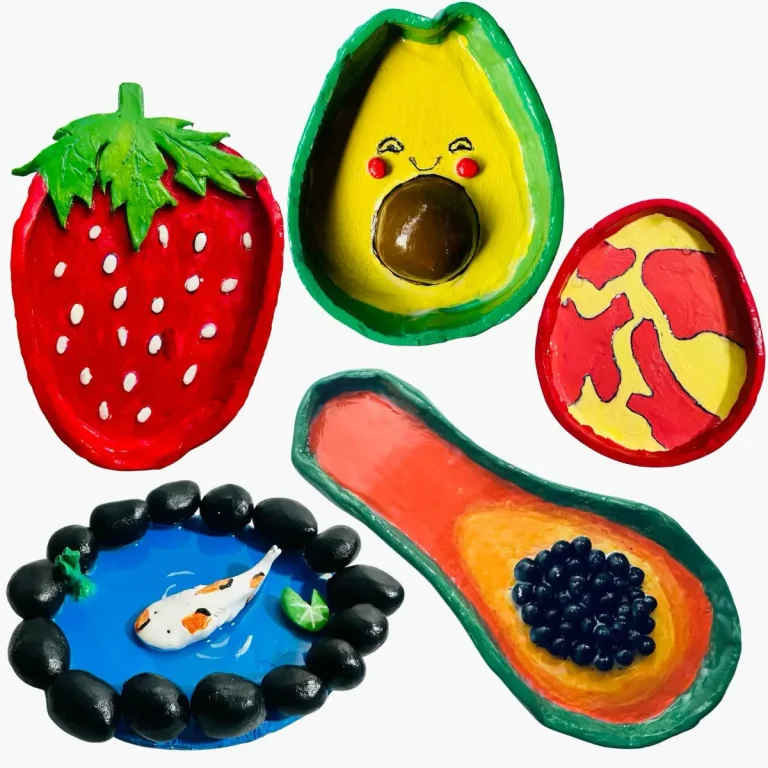

Have you noticed your air dry clay projects come out a little bit smaller after letting them dry for 24-48 hours?
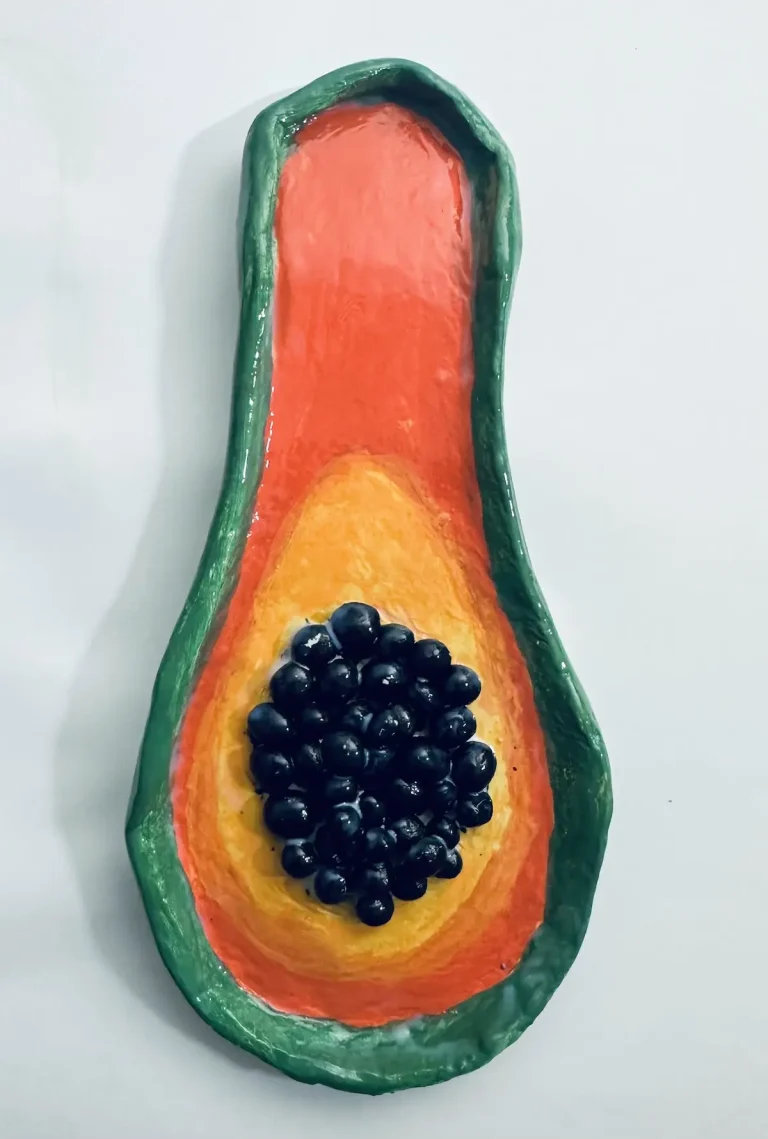
I have noticed that during my trinket tray projects. I’m a beginner air dry clay artist and made a few fruit-inspired trinket trays because I love to make them. 🍓
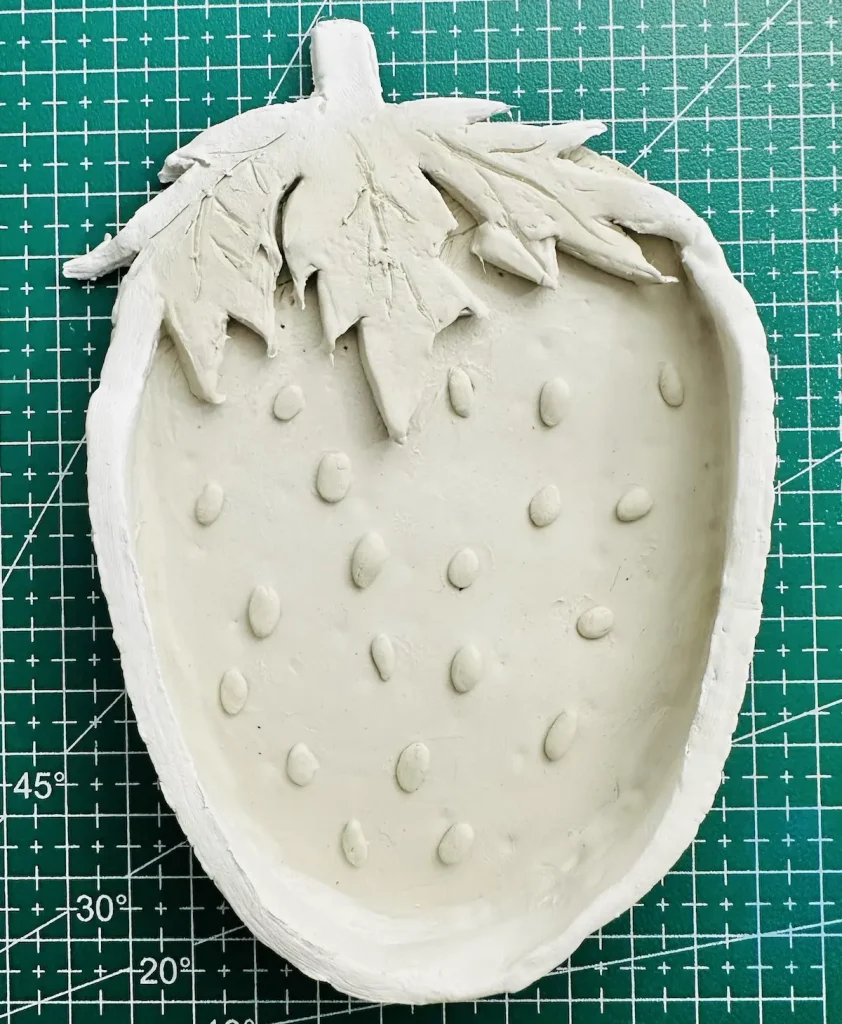
For instance, before making a strawberry trinket tray to use as a bangle holder for my wife, I measured her bangles and sized the base accordingly. However, after the clay dried, the tray was too small and had cracks on the surface.
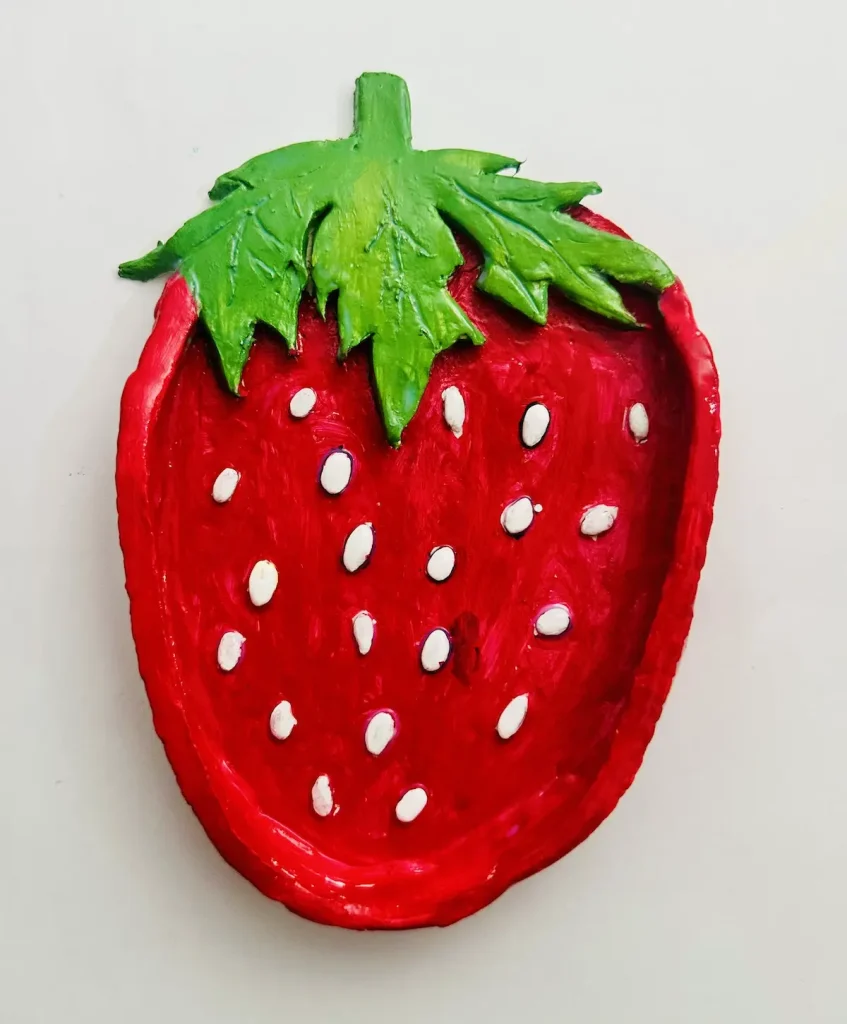
I was surprised but soon learned that air dry clay naturally shrinks during the drying process. It is essential to account for this shrinkage when planning your projects.
From that onwards, I planned for it and didn’t let the shrinkage of air dry clay crack my beautiful projects.
Let me show you how I account for the shrinkage of air dry clay in detail and what simple actions I take to stop my projects from cracking due to the damn shrinkage. Because it is a headache! 😫
Let’s dive in!
Why air dry clay loses volume
Air dry clay is a highly porous material with many moisture filled air pockets. As it dries, moisture inside these pockets evaporates and pulls the clay particles closer together, causing the clay to shrink and lose volume.
That’s the basic explanation of why your air dry clay shrinks.
You cannot stop air dry clay from shrinking as it dries. That’s its nature. But you can control and plan it while you’re making the project.
The shrinkage of air dry clay needs to be controlled and should be equal in all areas because, as soon as clay tends to shrink at different rates in different areas, it will start to form cracks because of the tension buildup between the layers of clay.
How losing water makes clay shrink
When you open the package, the air dry clay piece you take to your hand is filled with moisture. That water not only makes the clay soft but also takes up space between the air dry clay particles. It basically keeps everything attached, plump and stretched out.
After you make the project with air dry clay and let it dry in the air, the water inside will slowly evaporate into the air. 💨
When the water is gone, the empty spaces inside air dry clay start to close up. The remaining clay particles and binders which are paper fibers or glues holding the clay together, will start to pull against each other when closing the gaps that were once occupied by water.
Imagine a wet kitchen sponge. That’s exactly what happens here. When it is fully soaked, it’s large and thick. But as it dries out, it shrinks into a smaller, tiny thing.
Hope you understand now clearly why your clay shrinks as it dries.
How much does air dry clay actually shrink?
Generally air dry clay shrinks 5% to 12% as it dries, but that depends on the brand of air dry clay, the ingredients inside and how much water you have used to shape it when making something.
If you apply more water, the shrinkage amount can even be 5% to 30% as well.
Air dry clay shrinks across 3 dimensions, which are height, width and depth.
If we know exactly how much our air dry clay shrinks, it is easier to plan ahead before starting the project.
Average shrinkage rates by brand and type
Based on my experience and research I did, here’s how much air dry clay shrinks by brand and type: 📊
| Clay type | Clay brand | Shrinkage rates | Why? |
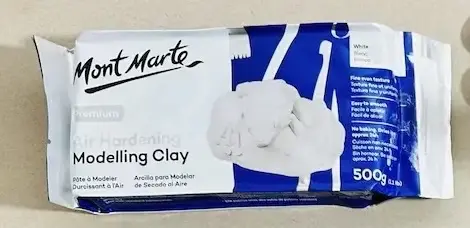
| Earth based air dry clays | – DAS – Mont Marte – Crayola | 10% – 15% | Contains more water inside and need more water when shaping |
| Paper clays | Creative Paperclay | 5% – 8% | Paper pulp and volcanic ash inside and tiny paper fibers interlock when water evaporates |
| Nylon reinforced and resin based Clays | High-end sculpting clays | Minimal or DIY cold porcelain clay up to 20% | Nylon reinforced clays offer incredible strength |
Thickness of the clay
Shrinkage amount also depends on the thickness of the clay. When your air dry clay project is too thick, that means more water inside, causing high shrinkage as it dries.
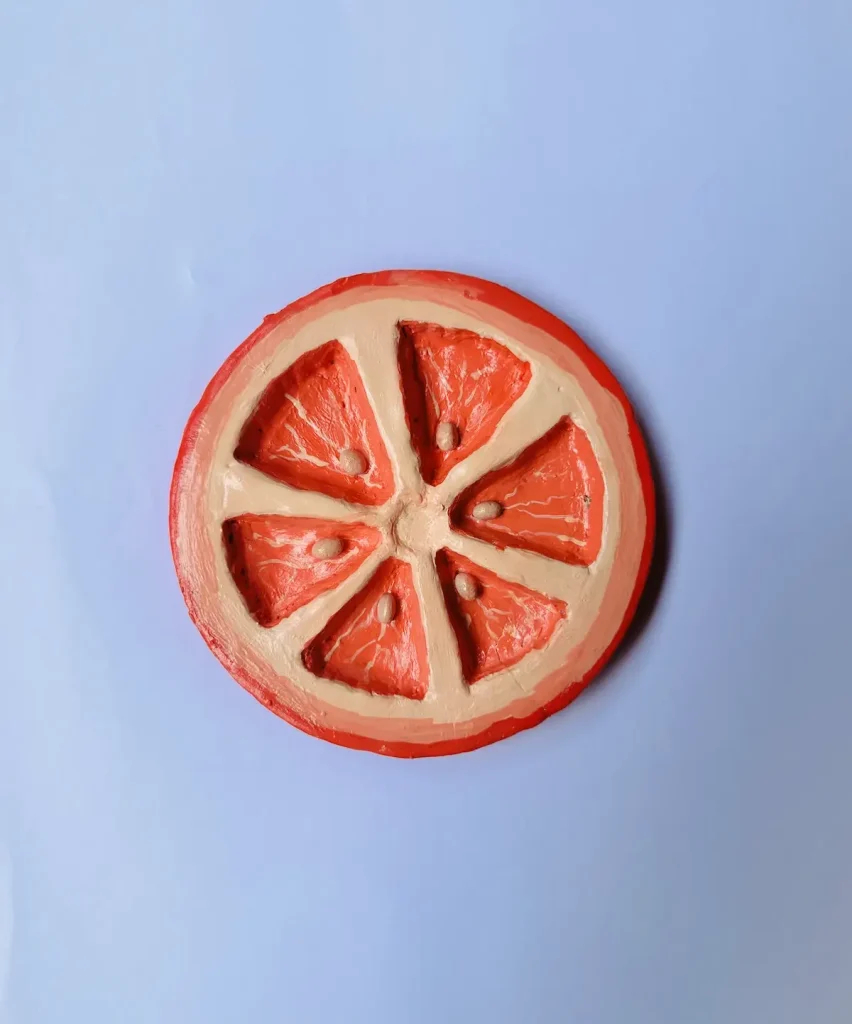
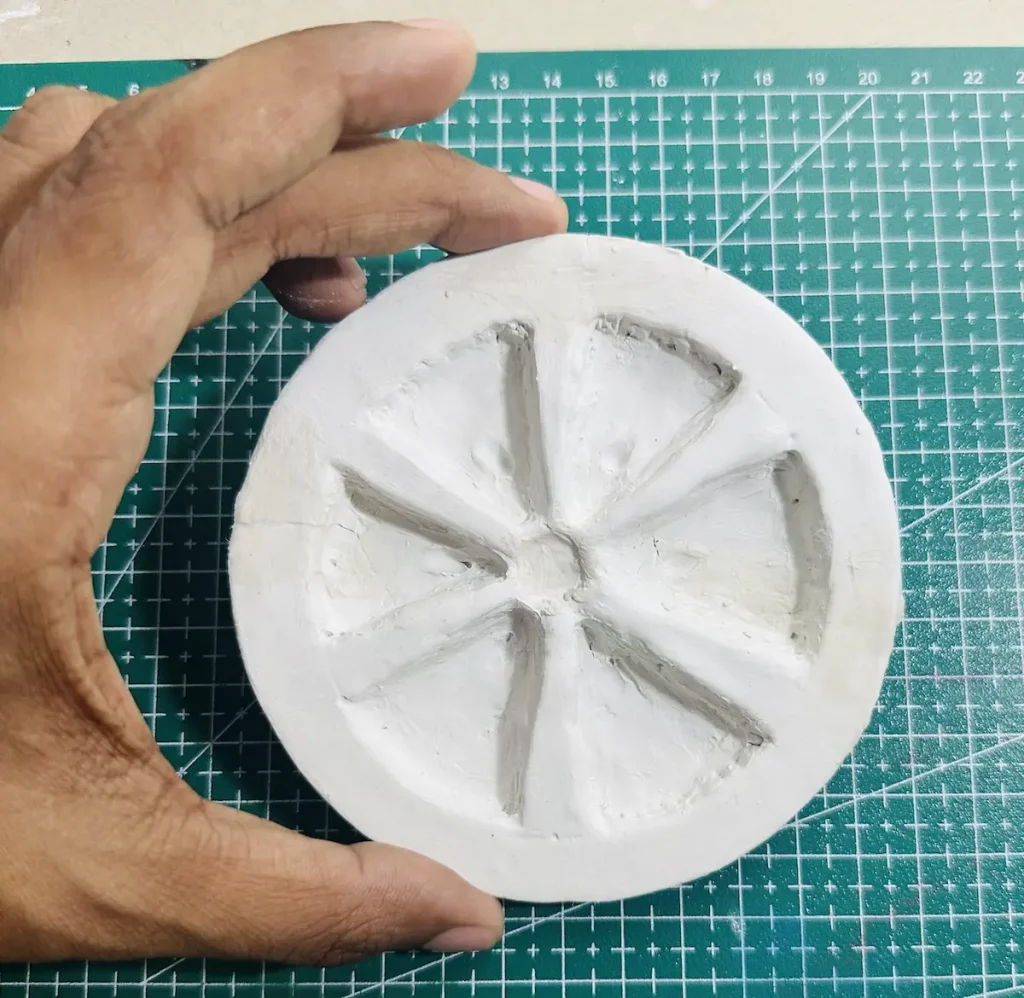
For example, my orange trinket tray had a thick and chunky tray base compared to my koi pond base which means orange trinket tray shrinks more than the koi fish pond one because it contains more water inside and loses more water inside as it dries.
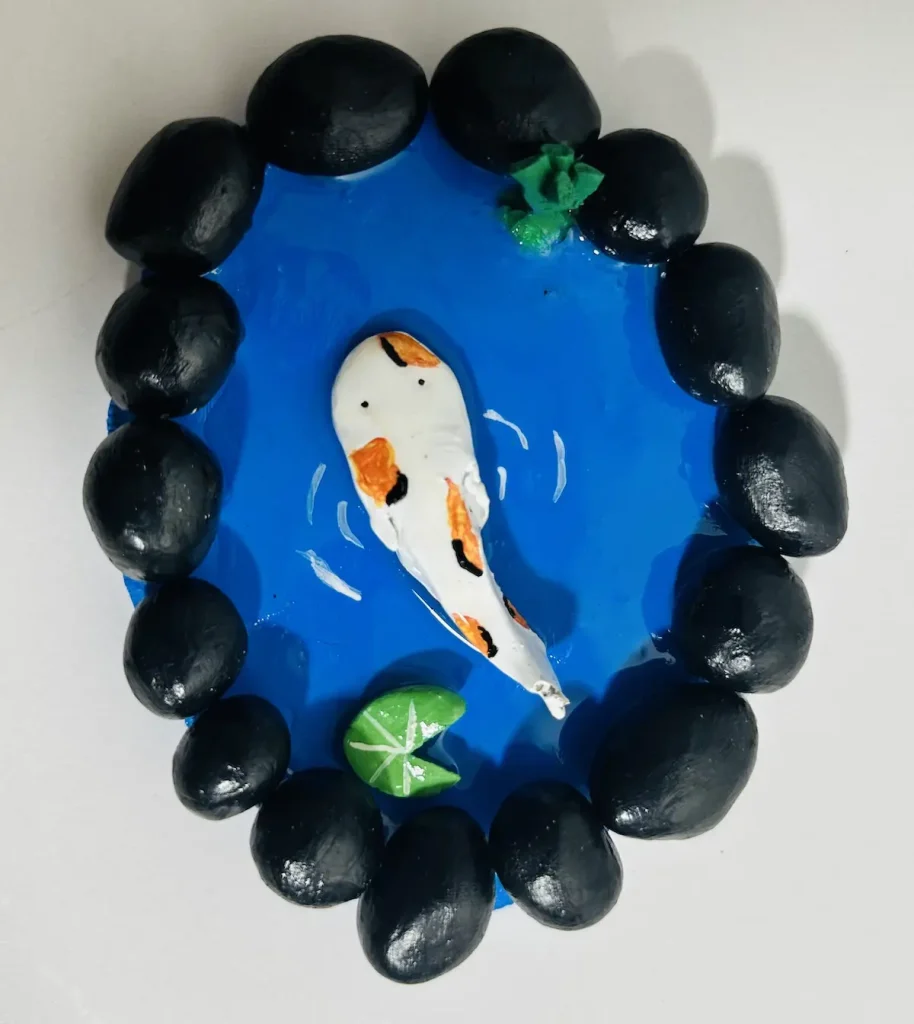
Thickness also affects the drying time of your air dry clay piece. When it is too thick, it contains more water and water inside those thick layers takes a lot of time to evaporate because of low air exposure.
Compared to that, the outside layers of air dry clay dry faster due to high air exposure. This creates a tension between the air dry clay layers. When this tension exceeds the force of binding agents, the clay starts to form cracks. Those cracks will become deeper and deeper as the clay dries.
Therefore, always try to aim for an even thickness about ¼ inch to ½ inch max when rolling. Making your clay too thick causes uneven shrinkage, and making it too thin causes clay to warp when drying.
Common shrinkage problems and how to avoid them
I’m sorry, friends. Three things can happen when you don’t identify or plan for the shrinkage of the air dry clay while you’re making the project. They are:
- Warping the clay on flat surfaces.
- Cracking the clay.
- Separation in multi-part pieces.
Warping on flat surfaces
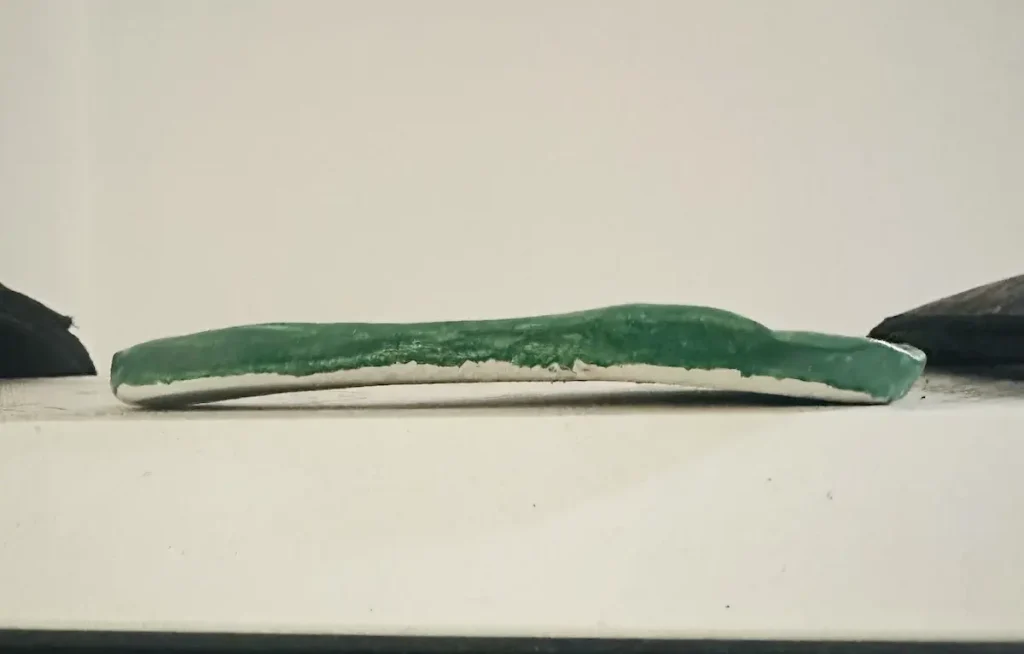
Warping the clay means the top of your air dry clay dries and shrinks faster than the bottom, causing the clay to curl upward from the edges.
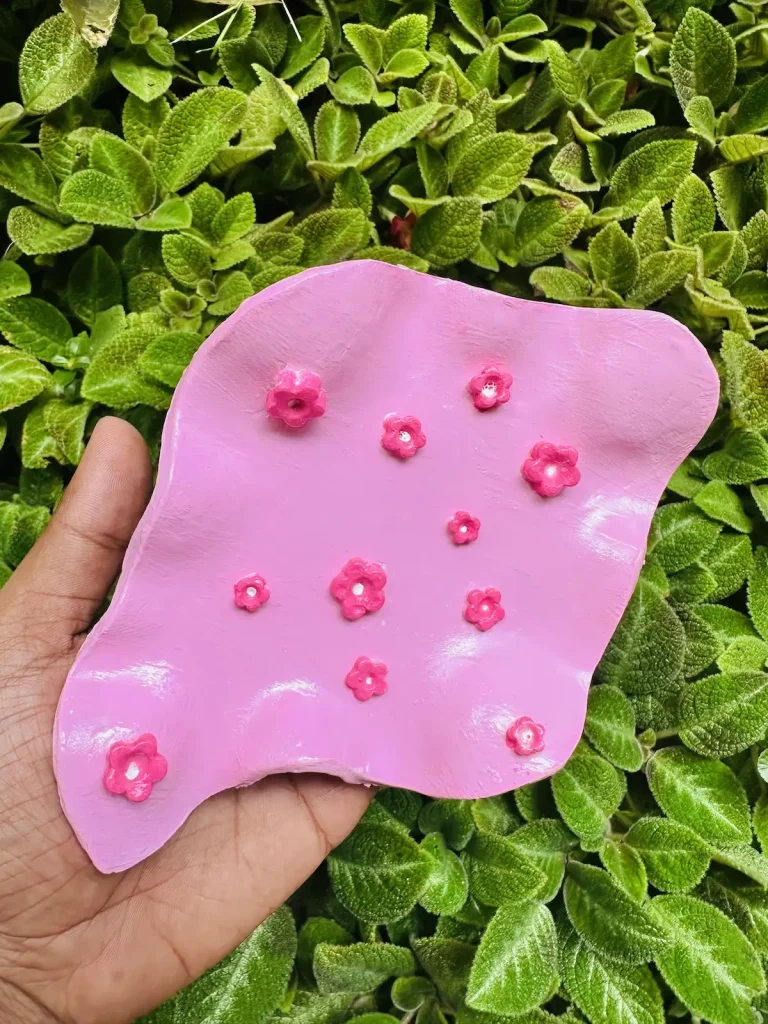
This happened during my papaya trinket tray project. The tray base was completely flat before I let it dry, but I noticed it wobbled on the table after it was completely dry. Came to know that this happened because the tray base was too thin and it warped when drying.
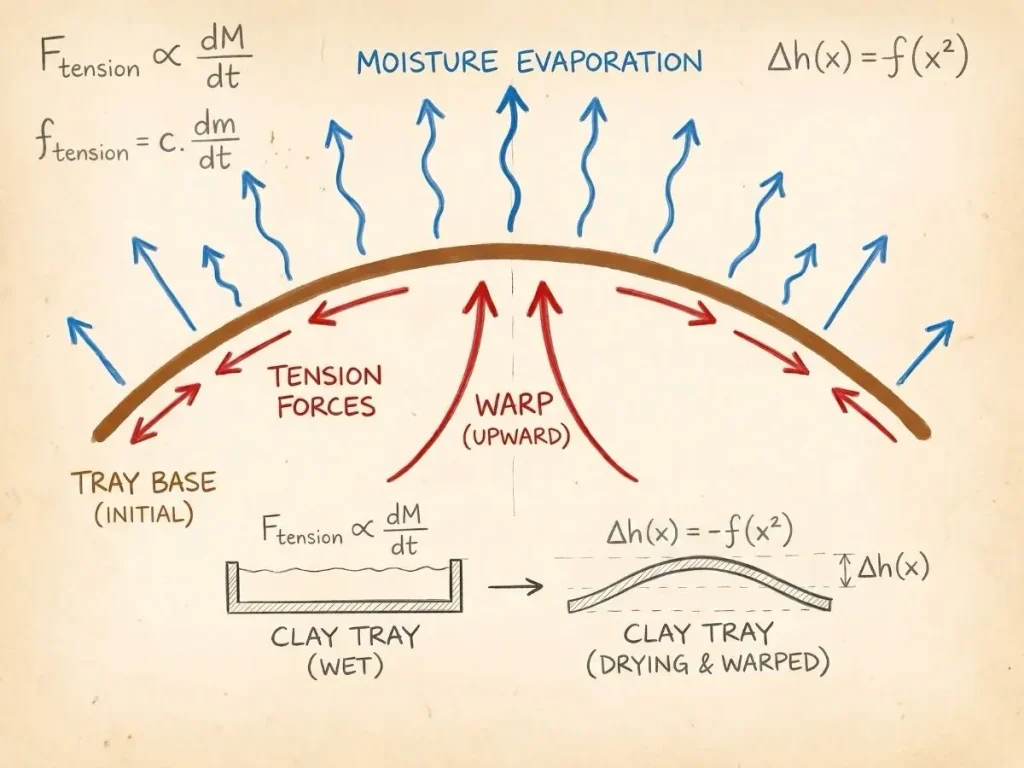
From that onwards, I make sure to make the tray base at least ¼ inch thick and flip it while drying upside up from time to time to make all the areas dry and shrink equally.
So if you made an air-dry clay project with a flat base, once the top part dried firmly, but not fully, gently flip it upside down so the bottom can breathe and dry equally as the top part.
This makes the overall shrinkage of the clay even and prevents warping when drying.
Cracking the clay
As I told you earlier air dry clay filled with moisture filled air pockets. But they are not organized. They spread randomly inside air dry clay.
For example, more moisture content can be seen inside than outside because moisture outside evaporates quickly when exposed to the air.
Now imagine you’re starting to make something from an air dry clay piece.
As we know, kneading comes first because clay needs to be soft enough for shaping.
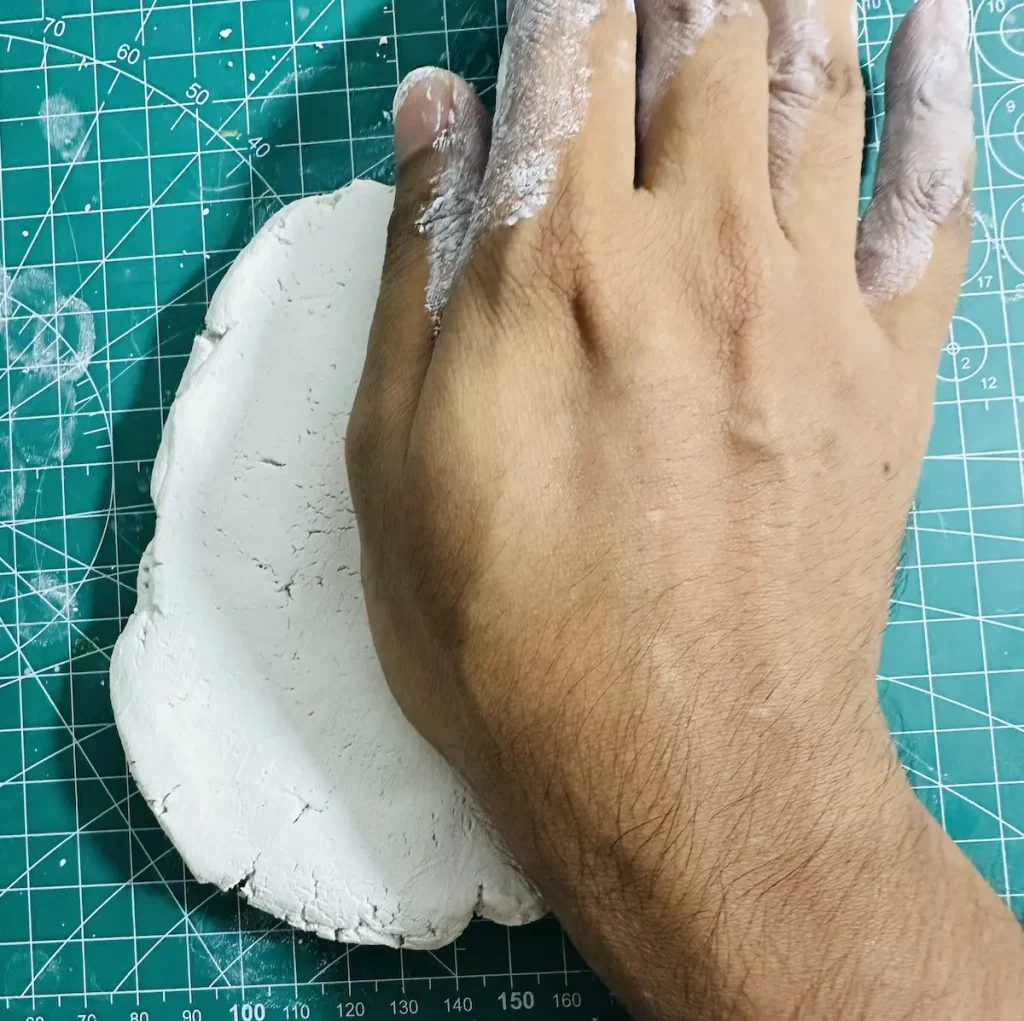
When you condition and knead the clay using push, pull and press techniques, the moisture inside will start to spread evenly across all the layers of air dry clay.
When the moisture concentration is same everywhere the clay dries evenly and shrinks evenly.
But what if you didn’t knead the clay well? That’s when the problem occurs.
When you don’t knead the clay well enough the moisture levels are different in every area. So, when you keep the project for drying, the moisture inside evaporate at different rates and the clay shrinks at different rates.
Because of this uneven shrinkage of air dry clay, cracks will start to form on the surface and between the layers can ruin your project.
First, they start as micro cracks and get deep as the clay dries. Therefore, always knead the clay well to avoid it from cracking when drying. 🔍
Separation in multi-part pieces
When I was making my first air dry clay project, which is a cute rabbit, its head, hands, belly, and legs fell apart when drying due to clay shrinkage. 🐰
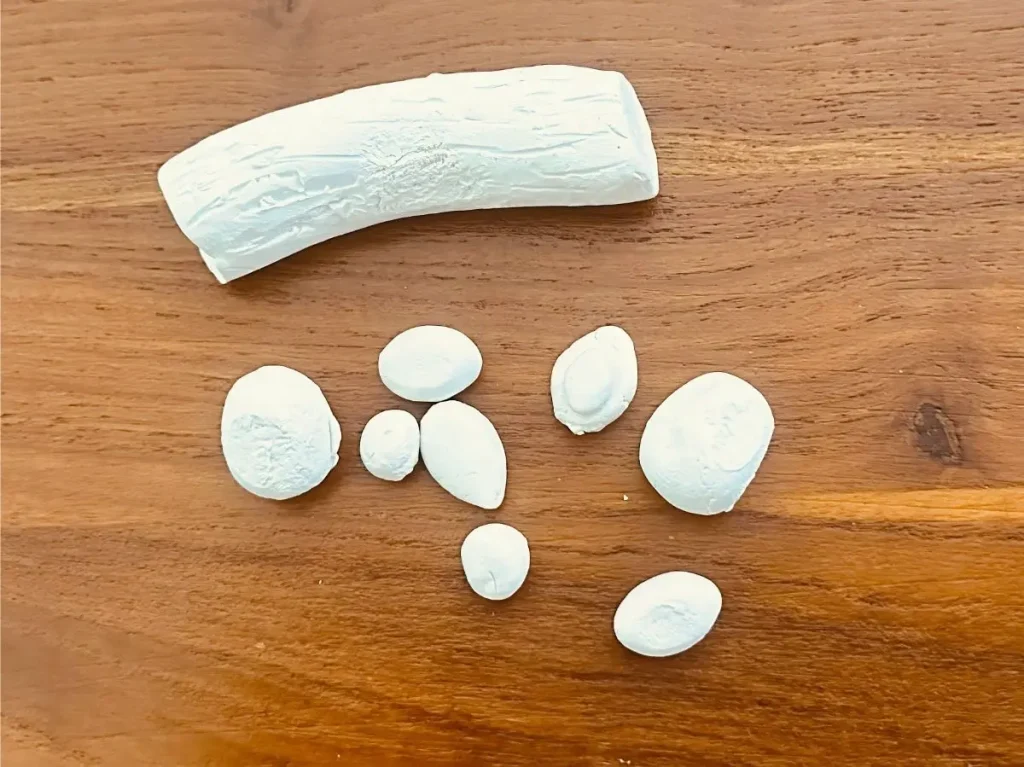
When you’re attaching two air dry clay pieces, the surfaces need to be scored first and have a little bit of water or slip applied on them as an adhesive agent for better grip.
When you attach two air dry clay pieces together with no score-and-slip technique, as the clay dries, those clay pieces will separate and start to shrink and lose joint, forming multi-part pieces.
This usually happens when one piece is thicker or wetter than the other. This makes them to dry at completely different rates.
You can avoid parts separation by the score-and-slip method, by gluing them with super glue, or by joining them by inserting a toothpick or small wire in the middle as a skeleton. 🛠️
How to plan for shrinkage before and while you sculpt
Here are the things I plan before starting to make my projects, considering the shrinkage: 📝
- Always make your air dry clay projects 10-15% larger than the desired final result.
- Apply only a little bit of water when kneading. More water means high evaporation and high shrinkage.
- Knead so well until the clay is soft and equally moisturized.
- Let the air dry clay project dry slowly, because slow drying means the project shrinks evenly with no cracks and warp.
- Make sure not to make walls or bases too thick. Thick bases form cracks due to uneven shrinkage when drying.
- Make sure not to make bases too thin. Thin bases warp easily when drying.
- Flip upside down when the project is drying.
- Don’t leave your project outside or under sunlight for fast drying. Fast drying means uneven shrinkage. ☀️
- Follow score and slip method when attaching pieces.
FAQ
How do you stop air dry clay from cracking when it shrinks?
Knead the clay well before shaping, apply a little bit of water, and don’t make the walls too thick.
Why did my air dry clay warp while drying?
Don’t make the flat bases too thin and flip the project upside down while drying.
Should you cover air dry clay to stop it from shrinking too fast?
Yes, covering air dry clay project with a fabric is great which can slow down the drying and avoid it from shrinking too fast. I do that.
Can I add wet clay to dry clay if it shrinks?
No, don’t add wet clay to dry clay because water evaporate at high rate from wet clay and it shrinks as it dries causing cracks and separation from already dried clay.
Final thoughts
Now you know how you can easily avoid air dry clay from cracking and warping when drying due to uneven shrinkage. You simply have to plan and make. You can’t stop its shrinkage, but you can control how it happens without damaging your beautiful project. ✨
I’d love to know the tips you follow to handle shrinkage. Make sure to tell us about them in the comments. Cheers! 🤟🏾